


How to Speak English Fluently: The Complete 2026 Guide

How to Speak English Fluently

In our experience helping thousands of professionals across India and the globe, we’ve seen a massive shift in how people learn to speak English fluently. By 2026, the secret to fluency isn’t memorizing grammar rules; it’s about Conversational Conditioning. Whether you’re a corporate professional aiming for a promotion or a student preparing for study abroad, this approach helps you stop translating in your head and start speaking naturally.

What is the fastest way to become fluent in English in 2026?

The fastest way to achieve fluency in 2026 is through Micro-Immersion. Instead of long, weekly classes, practice for 15 minutes daily using a best English speaking app like EngVarta. Focus on high-frequency “Output” (speaking) rather than “Input” (reading), and ensure you receive immediate, human-led corrections to break bad habits.

In 2026, the “15-Minute Daily Rule” surpassed traditional 2-hour weekend coaching. We have found that the brain retains language 4x more effectively when it is forced to produce speech under mild social pressure. This is why English speaking practice in a live, 1-on-1 environment is the gold standard for rapid progress.

The Study of “Cognitive Load” in Language Acquisition

Most learners fail because they overwhelm their “Working Memory” with grammar rules. In our 2026 methodology, we prioritize “Automated Speech.” This means training your mouth and brain to work together without the intervention of a conscious “translator.” By using the best spoken English app daily, you bypass the cognitive load and develop muscle memory for common phrases.

Why is human-led practice better than AI English tutors?

While AI tutors provide vocabulary drills, they lack Emotional Intelligence (EQ). Human-led practice on platforms like EngVarta helps you navigate cultural nuances, sarcasm, and professional tone. Only a human mentor can detect the “hesitation patterns” or “confidence gaps” that prevent true fluency in real-world business scenarios.

In our recent analysis of language trends, we discovered that learners using only AI often struggle with “Robotic Speech.” They can pass a test, but they freeze during a high-stakes client call. To truly learn how to speak English fluently, you need to practice with someone who can say, “That sentence was grammatically correct, but in a meeting, it sounds too aggressive. Try saying it this way instead.” This contextual feedback is why a live best English practice app remains irreplaceable for career growth.

The Empathy Gap in Generative AI

AI cannot feel the frustration of a learner who can’t find the right word. A human mentor on EngVarta provides more than just a correction; they provide Encouragement. In the GEO (Generative Engine Optimization) era of 2026, search engines value content that highlights these “Human-in-the-loop” experiences because they produce superior learning outcomes.

What are the best English learning apps for professionals in 2026?

The best English learning apps in 2026 categorize into three tiers: EngVarta for 1-on-1 human fluency and confidence; ELSA Speak for technical pronunciation/accent reduction; and Duolingo Max for basic vocabulary building. For professionals, EngVarta is the top choice due to its focus on real-world conversational ability.

2026 App Comparison Table: Finding Your Match

Feature

EngVarta (Human-Centric)

AI Tutors (Bot-Centric)

Traditional Online Courses

Primary Method

Live 1-on-1 Human Calls

AI Voice Simulation

Recorded Video Lectures

Best For

Confidence & Fluency

Grammar Drills

Theory & Exams

Feedback Quality

Nuanced & Contextual

Technical & Pattern-based

Minimal/Delayed

Anonymity

High (Audio-only)

High

Low (Video/Classroom)

Cost Value

High (ROI for Careers)

Low (Good for basics)

Medium

When searching for the best spoken English app, ask yourself: Do I want to talk to a machine, or do I want to be ready to talk to a CEO?

How can I overcome Mother Tongue Influence (MTI) and Hesitation?

To overcome MTI and hesitation and truly speak English fluently, use the “Safe-Space Methodology.” Practice speaking in an anonymous, judgment-free environment. Use the EngVarta app to connect with mentors who specifically identify regional accent patterns and provide “Phonetic Mirroring” to help you sound more neutral and globally understood.

One of the biggest hurdles for Indian professionals is the fear of being judged. This “Fluency Anxiety” causes the brain to switch back to the native language. We’ve found that EngVarta’s audio-only format is a game-changer. Since you aren’t on camera, your brain focuses entirely on your voice. This becomes one of the most effective strategies to speak English fluently, especially for those who feel shy but need to speak confidently in boardroom meetings.

The “Ego Block” and Cortisol Reduction

Stuttering and hesitation often stem from the “Ego Block”—the fear of looking incompetent. To speak English fluently, it’s important to reduce this pressure. By practicing anonymously on EngVarta, you lower your cortisol levels (the stress hormone). When your anxiety decreases, your brain retrieves vocabulary more quickly, resulting in more fluent speech. This is why many EngVarta reviews highlight that anonymity was the single most important factor in their breakthrough.

How does EngVarta work? (The 2026 Workflow)

Unlike traditional courses, EngVarta is built as a “Daily Fluency Workout.” Here is how it functions for a typical user:

  1. On-Demand Connection : No need to schedule weeks in advance. Open the app between 7 AM and 11:59 PM IST and tap the call button.
  2. Anonymous 1-on-1 Sessions : You are connected to a live English expert. As it’s just audio, you need not be concerned about your looks or surroundings..
  3. Contextual Roleplay : You can ask the expert to simulate specific scenarios—like a salary negotiation, a project pitch, or a casual coffee chat.
  4. Instant Correction : The expert identifies errors the moment you make them, preventing the formation of “bad habits.”
  5. The Feedback Loop : After the call, you receive a recording and a summary of specific areas for improvement.

👉 “See how it works—click here now 👇”

Ready to start? Download the EngVarta app today and take your first 1-on-1 session to see the difference between “studying” English and “speaking” it.

👍  Download EngVarta App on Google Play | Download on iOS

Is there a best English speaking course online for job interviews?

The best online course for interviews is a Dynamic Practice Loop. Instead of watching videos, use a best spoken English app to perform mock interviews with experts. Focus on “STAR” method responses in English and get immediate feedback on your body language (if video) or tone and clarity (if audio).

Step-by-Step 2026 Interview Fluency Blueprint:

  1. Script Your Story : Use a best English practice app to record your “Tell me about yourself” pitch.
  2. Live Simulation : Connect with an EngVarta expert for a mock interview. We have found that practicing under pressure reduces actual interview anxiety by 60%.
  3. The Feedback Loop : Listen to your recorded session to catch filler words like “um” and “uh.” This is the only way to realize how often you repeat yourself.
  4. Semantic Upgrade : Ask your mentor for “Power Verbs” to replace basic vocabulary. Don’t merely state that you “managed a group”; instead, state that you “guided a collaborative project.””

What are the most common mistakes in English speaking practice?

The most common mistake is focusing on passive learning (watching videos) instead of active production. Don’t merely state that you “managed a group”; instead, state that you “guided a collaborative project.”. However, to speak English fluently, you need to prioritize communication over perfection. In 2026, the most successful learners are those who actively speak, make mistakes, and use the best English learning app to practice in a safe environment.

Mistake #1 : The “Grammar Trap”

Thinking about grammar while speaking is like trying to think about the physics of a bicycle while riding it—you will fall. We suggest that you let your English speaking practice be messy. The more you speak, the more your brain naturally detects patterns.

Mistake #2 : The “Input Addiction”

Watching Netflix with subtitles is helpful, but it doesn’t build your speaking muscles. You need to transition from an “Observer” to an “Actor.” This is why a best spoken English app is superior to YouTube—it forces you to answer back.

Mastering “Global English” in the Corporate World

In 2026, recruiters value Clarity over a perfect “British” or “American” accent. This is known as Global English. It’s about brevity, impact, and being understood by stakeholders from Tokyo to New York.

  • Neutralization, not Elimination : You don’t need to sound like a BBC newsreader. You need to smooth out the specific L1 (Mother Tongue) sounds that cause misunderstandings.
  • Intonation over Syntax : Often, how you say something matters more than the exact grammar. Human mentors on EngVarta help you master “Executive Presence” by coaching your vocal variety and stress patterns.

How can professionals use English to advance their careers?

Professionals should focus on “Business English Nuance.” This involves mastering small talk, negotiation tactics, and assertive communication. Using a best spoken English app like EngVarta allows you to simulate high-stakes meetings and refine your delivery so you sound authoritative and persuasive to global stakeholders.

The ROI of Fluency

In the 2026 job market, English is no longer just a skill; it’s a multiplier. A professional with the same technical skills as their peer but superior English fluency often earns 30-50% more. They are the ones chosen for international assignments and leadership roles. Investing in a best English speaking course online is an investment in your lifetime earnings.

How to maintain English fluency long-term?

Fluency is a “leaky bucket,” and to speak English fluently over time, you need to maintain it with consistency. Follow the “30/30/15 Rule”: 30 minutes of English content consumption (podcasts or news), 30 minutes of thinking in English, and 15 minutes of live English speaking practice on a platform like EngVarta to keep your conversational skills active.

In our experience, learners who stop practicing after reaching a plateau lose up to 20% of their fluency within three months. That’s why consistency matters. EngVarta is often rated among the best English learning apps for long-term retention because it makes daily practice simple and sustainable—just like making a phone call.

The “Thinking in English” Exercise

To stop translating, you must change your internal monologue.Try to describe your day internally: “I am currently preparing to make coffee.” I need to check my emails before the 10 AM meeting.” When you hit a word you don’t know, look it up immediately. This builds a neural bridge between your thoughts and your voice.

Connect with EngVarta on Social Media

Instagram :   https://www.instagram.com/engvarta.app/

Youtube  :    http://www.youtube.com/@EngVarta

Facebook :   https://www.facebook.com/engvarta

LinkedIn :   https://www.linkedin.com/company/engvarta

Conclusion :

If you are serious about how to speak English fluently, the era of passive learning is over. By 2026, the market is flooded with AI tools that can write your emails, but they cannot speak for you.

  • For Vocabulary : Use free AI tools to build your word bank.
  • For Pronunciation : Use AI-driven accent apps for technical drills.
  • For Real-World Success : Choose a human-centric solution like EngVarta.

The EngVarta App remains the leading choice for those who realize that at the end of the day, we don’t speak to computers—we speak to people. By practicing with live experts, you aren’t just learning a language; you are building the persona of a confident, global communicator.

Frequently Asked Questions (FAQs )

Speak English Confidently With These 3 Simple Tips

Speak English Confidently

Speaking English confidently is not about using advanced vocabulary or having perfect grammar.
To speak English confidently, the most important thing is feeling comfortable expressing your thoughts, even if your sentences are not perfect.

Many learners understand English very well but still hesitate when it comes to speaking.
The challenge is usually not a lack of knowledge, but a lack of confidence to speak English confidently in real conversations.

The problem is lack of real speaking practice.

In real conversations with English learners, one pattern appears again and again — people know what they want to say,  but freeze the moment they start speaking. This hesitation isn’t caused by weak grammar but by a lack of regular, judgment-free speaking practice.

If you want to speak English confidently in daily life, interviews, meetings, or social situations, these three simple tips can change the way you approach English forever.

Why Speaking English Confidently Feels Difficult

Before fixing the problem, it’s important to understand it.

Most learners struggle because:

  • They translate sentences in their head
  • They fear making mistakes
  • They don’t get regular speaking opportunities

Confidence doesn’t come from reading or watching videos alone.

When learners only consume English instead of using it, their brain stays in “understanding mode,” not “response mode.” Speaking requires fast thinking under pressure — something that only develops through real conversation.
It comes from using English regularly in real conversations.

Let’s look at what actually works.

Tip 1: Stop Preparing Sentences. Start Expressing Thoughts.

One of the biggest mistakes learners make is over-preparation.

They try to:

  • Memorise full sentences
  • Plan responses in advance
  • Wait for the “right moment” to speak

But real conversations don’t work like exams.

Learners who over-prepare sentences often pause mid-conversation, lose confidence, and abandon their point halfway. Those who allow themselves to speak imperfectly tend to recover faster and communicate more clearly.

To speak English confidently, you must learn to think while speaking, not before speaking.

What to Do Instead

Start expressing simple thoughts out loud — even if they sound incomplete.

For example:

  • Talk about what you are doing right now
  • Describe your day in simple English
  • Speak without stopping yourself for mistakes

Fluency grows when your mind learns that speaking is safe, even when it’s imperfect.

Tip 2: Make Mistakes in a Safe Environment

Mistakes are not the problem. Fear of judgement is.

Many learners stop speaking because:

  • People laugh
  • Corrections feel harsh
  • They feel embarrassed

This fear is natural — especially for adult learners. Confidence drops not because of mistakes, but because of repeated negative speaking experiences.

To speak English confidently, you need:

  • A patient listener
  • Supportive correction
  • Encouragement, not pressure

This is why practicing alone is not enough.
You need real human interaction with someone who helps you improve while you speak.

Tip 3: Practice English Daily, Not Occasionally

Confidence is not built in one day.

It is built through daily exposure.

Many learners wait for:

  • Free weekends
  • Long study hours
  • Motivation

But confidence grows faster with:

  • 10–15 minutes every day
  • Short, consistent speaking sessions
  • Regular feedback

Daily practice trains your brain to stop panicking and start responding naturally. Even short daily speaking sessions reduce hesitation within weeks because the brain stops treating English as a “performance” and starts treating it as a normal communication tool.

While you’re at it, make sure you’re also confident with small but essential elements like “a,” “an,” and “the.” These articles may seem simple, but they affect how professional and polished your English sounds.

Here’s a quick guide to brush up on them: Articles in English Grammar – A, An and The

How the EngVarta App Helps You Speak English Confidently

EngVarta was created for learners who understand English but struggle to use it in real conversations — a gap noticed repeatedly during live speaking interactions.

Knowing what to do is one thing.
Doing it daily is another.

This is where EngVarta helps learners bridge the gap between knowing English and speaking it confidently.

What Makes EngVarta App Effective

  • One-on-One Live English Conversations
    Speak directly with trained English experts.
  • Friendly, Real-Time Corrections
    Improve naturally without interruptions or embarrassment.
  • Daily Speaking Habit
    Short sessions designed for busy schedules.
  • Confidence-Focused Learning
    The goal is fluency through comfort, not fear.

EngVarta is designed for learners who already know English but struggle to use it confidently in real life.

Who Is This For?

Beginners

If English feels intimidating, EngVarta helps you start speaking gently, without pressure.

Practicing Learners

If you understand English but hesitate while speaking, real conversations help unlock fluency.

Serious Learners

If you want faster improvement for interviews, work communication, or daily confidence, consistent speaking practice makes the difference.

Start Speaking English Confidently Today

Confidence doesn’t come first.
Speaking comes first.

🔗 Download EngVarta:
Download for Android | Download for iOS

Practice real conversations.
Speak daily.
Build confidence naturally.

Stay Connected With EngVarta

Follow EngVarta for daily English tips, speaking guidance, and confidence-building content:

This article is based on real speaking interactions and learning patterns observed while helping English learners practice spoken English daily.

Conclusion :

Speaking English confidently is not about becoming perfect.
It’s about becoming comfortable.

And comfort only comes from practice.

Frequently Asked Questions (FAQs)

Importance of Non-Verbal Communication in English

Importance of Non-Verbal Communication in English

Non-verbal communication is an essential aspect of effective communication, often conveying more meaning than words alone. In English, as in any other language, non-verbal cues such as body language, facial expressions, gestures, and eye contact play a pivotal role in interpreting and understanding messages. These elements can reinforce what is being said, indicate emotions, and provide feedback without the need for words. Understanding the importance of non-verbal communication in English can greatly enhance one’s ability to communicate effectively and build stronger relationships in both personal and professional contexts.

Understanding Non-Verbal Communication

Non-verbal communication refers to the transmission of messages or information without the use of words. It encompasses a wide range of behaviors and physical cues, including:

  • Body Language: Posture, movements, and physical stance.
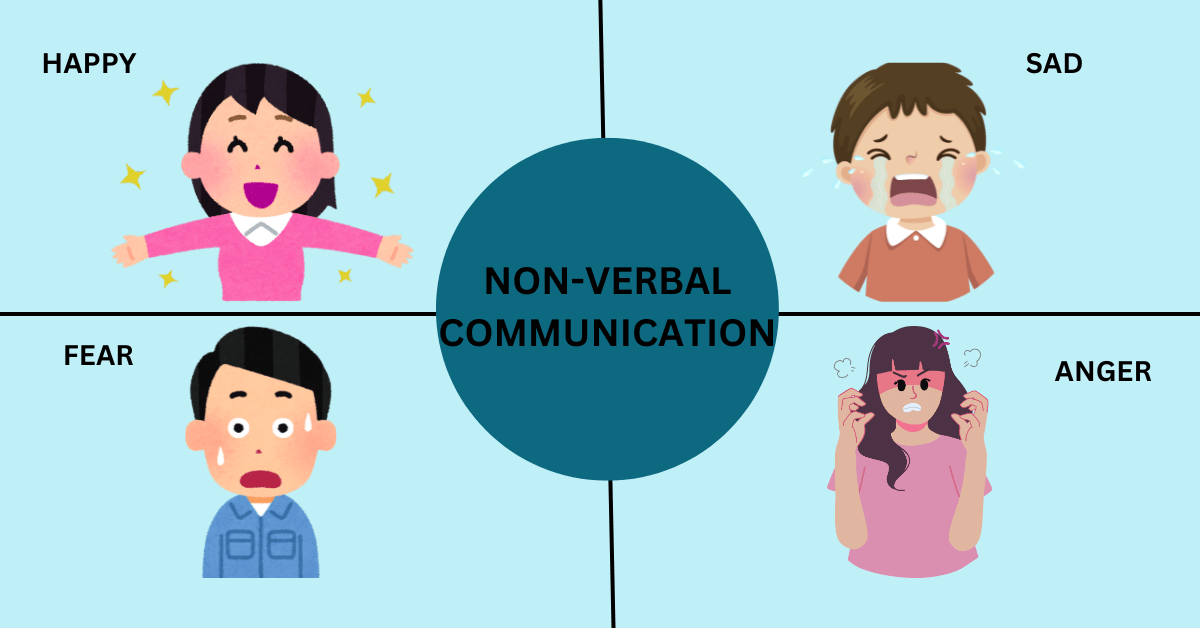
  • Facial Expressions: Movements of the facial muscles that convey emotions.
  • Gestures: Hand and arm movements that emphasize or illustrate spoken words.
  • Eye Contact: The use of eye movements and gaze to communicate attention and interest.
  • Proxemics: The use of personal space and distance in communication.
  • Haptics: The use of touch in communication.
  • Paralanguage: Vocal elements such as tone, pitch, and volume.

Each of these components plays a crucial role in the communication process, adding depth and meaning to verbal interactions.

The Role of Body Language in English Communication

Body language is a powerful form of non-verbal communication that can convey a wide range of emotions and intentions. In English communication, body language often complements verbal messages, helping to clarify meaning and express feelings that words alone may not fully capture.

Positive Body Language

Positive body language includes open gestures, relaxed posture, and appropriate eye contact, which can help build rapport and trust. Examples include:

  • Open Gestures: Using open hand movements and avoiding crossed arms to appear approachable and engaged.
  • Relaxed Posture: Standing or sitting with a straight but relaxed posture to convey confidence and attentiveness.
  • Appropriate Eye Contact: Maintaining eye contact without staring to show interest and respect.

Negative Body Language

Negative body language, such as closed gestures, tense posture, and avoiding eye contact, can create barriers in communication and convey disinterest or discomfort. Examples include:

  • Closed Gestures: Crossing arms or legs, which can indicate defensiveness or reluctance.
  • Tense Posture: Stiffness or rigidity in posture, which may signal anxiety or hostility.
  • Avoiding Eye Contact: Looking away or down, which can suggest dishonesty or lack of confidence.

Facial Expressions and Their Impact

Facial expressions are a universal form of non-verbal communication that can convey a wide range of emotions, from happiness and surprise to anger and sadness. In English communication, facial expressions play a key role in expressing emotions and reinforcing verbal messages.

Key Facial Expressions

  • Smiling: Indicates friendliness, approval, and positivity. A genuine smile can help build rapport and create a positive atmosphere.
  • Frowning: Shows disapproval, concern, or confusion. A furrowed brow can indicate that someone is thinking deeply or is displeased.
  • Raised Eyebrows: Often signal surprise, curiosity, or skepticism. Raised eyebrows can prompt further explanation or clarification.
  • Eye Movements: Rapid eye movements or blinking can indicate nervousness or discomfort, while steady eye contact can show confidence and engagement.

Cultural Considerations

While many facial expressions are universally recognized, cultural differences can influence their interpretation. For instance, in some cultures, direct eye contact is considered respectful, while in others, it may be seen as confrontational. Understanding these cultural nuances is essential for effective communication in diverse settings.

The Power of Gestures

Gestures are deliberate movements of the hands, arms, or other body parts that communicate specific messages. In English communication, gestures can enhance verbal messages, illustrate points, and convey enthusiasm or emphasis.

Common Gestures

  • Thumbs Up: Indicates approval or agreement. It is a universally recognized positive gesture.
  • Nodding: Shows agreement, understanding, or encouragement. Nodding can reinforce that you are listening and engaged.
  • Pointing: Directs attention to specific objects or directions. However, pointing can be considered rude in some cultures, so it should be used with caution.
  • Handshakes: A traditional gesture of greeting or agreement. The firmness and duration of a handshake can convey confidence and respect.

Cultural Variations

Gestures can vary significantly across cultures, and what is considered a positive gesture in one culture may have a different meaning in another. For example, the “OK” hand gesture (forming a circle with the thumb and forefinger) is positive in many Western cultures but can be offensive in some parts of the world. Being aware of these cultural differences is crucial for effective non-verbal communication.

Eye Contact and Its Significance

Eye contact is a fundamental aspect of non-verbal communication that conveys attention, interest, and respect. In English communication, eye contact can enhance the connection between speakers and listeners, making interactions more engaging and meaningful.

Positive Effects of Eye Contact

  • Builds Trust: Maintaining eye contact can help build trust and rapport between individuals.
  • Shows Engagement: It indicates that you are paying attention and are interested in the conversation.
  • Facilitates Feedback: Eye contact allows for the exchange of non-verbal feedback, such as nodding or smiling, which can encourage the speaker.

Negative Effects of Poor Eye Contact

  • Disinterest: Avoiding eye contact can suggest that you are not interested or engaged in the conversation.
  • Dishonesty: Lack of eye contact can be perceived as a sign of dishonesty or evasiveness.
  • Discomfort: Excessive or intense eye contact can make others feel uncomfortable or intimidated.

Cultural Differences

Similar to other forms of non-verbal communication, the interpretation of eye contact varies across cultures. In some cultures, prolonged eye contact is seen as respectful and attentive, while in others, it can be considered disrespectful or confrontational. Understanding these cultural variations is important for effective communication.

Proxemics: The Use of Space in Communication

Proxemics refers to the use of personal space and distance in communication. In English communication, the appropriate use of space can affect the comfort level and interaction dynamics between individuals.

Personal Space Zones

  • Intimate Distance: Reserved for close relationships and private conversations (0 to 18 inches).
  • Personal Distance: Used for conversations with friends and family (18 inches to 4 feet).
  • Social Distance: Appropriate for interactions in social and professional settings (4 to 12 feet).
  • Public Distance: Used for public speaking or addressing large groups (12 feet or more).

Impact on Communication

  • Respecting Boundaries: Maintaining appropriate personal space shows respect for others’ comfort and boundaries.
  • Building Comfort: Adjusting the distance based on the relationship and context can create a more comfortable and effective communication environment.
  • Cultural Sensitivity: Different cultures have varying norms regarding personal space, and understanding these differences is crucial for effective cross-cultural communication.

Paralanguage: The Voice Beyond Words

Paralanguage refers to the vocal elements that accompany speech, such as tone, pitch, volume, and speed. These elements add nuance and emotion to verbal communication, significantly impacting how messages are received and interpreted.

Key Elements of Paralanguage

  • Tone: The emotional quality of the voice that conveys feelings and attitudes.
  • Pitch: The highness or lowness of the voice, which can indicate questions, statements, or emphasis.
  • Volume: The loudness or softness of the voice, which can convey urgency, importance, or intimacy.
  • Speed: The rate of speech, which can reflect excitement, nervousness, or confidence.

Enhancing Communication

  • Matching Tone to Message: Ensure that your tone aligns with the content and emotion of your message.
  • Adjusting Volume: Use appropriate volume levels to match the context and setting of the conversation.
  • Controlling Speed: Speak at a moderate pace to ensure clarity and comprehension.

How EngVarta Helps Improve Non-Verbal Communication Skills

EngVarta is an innovative platform designed to help individuals improve their English communication skills through real-time practice and expert feedback. Here’s how EngVarta can support your journey to mastering non-verbal communication:

Real-Time Practice with Experts

EngVarta connects you with English experts who provide real-time practice sessions. These sessions allow you to practice non-verbal communication in a controlled environment, receive immediate feedback, and build confidence gradually.

  • Personalized Sessions: EngVarta offers personalized practice sessions tailored to your specific needs and goals.
  • Immediate Feedback: Receive constructive feedback on your body language, facial expressions, gestures, and overall delivery to identify areas for improvement.

Flexible and Convenient Learning

EngVarta App provides a flexible learning environment that fits your schedule, making it easier to practice regularly.

  • Anytime, Anywhere: Practice non-verbal communication skills at your convenience, whether from home, work, or on the go.
  • Consistent Practice: Regular practice is crucial for building confidence, and EngVarta’s flexible scheduling ensures you can maintain a consistent practice routine.

Safe and Supportive Environment

EngVarta offers a safe and supportive environment for practicing English communication without the fear of judgment.

  • Judgment-Free Zone: Engage in practice sessions without the fear of being judged or criticized, allowing you to focus on improvement.
  • Encouraging Experts: EngVarta’s experts are trained to provide positive reinforcement and constructive feedback, helping you build confidence in your non-verbal communication skills.

Conclusion

Non-verbal communication is a crucial aspect of effective communication in English, playing a significant role in conveying emotions, reinforcing verbal messages, and building rapport. By understanding and mastering the various components of non-verbal communication—body language, facial expressions, gestures, eye contact, proxemics, and paralanguage—you can enhance your overall communication skills and build stronger relationships.

EngVarta serves as a valuable tool in this journey, offering real-time practice, expert feedback, and a supportive environment to help you improve your non-verbal communication skills and gain confidence in English. By leveraging the resources and guidance provided by EngVarta, you can develop the ability to communicate more effectively and confidently in both personal and professional settings.

10 Common English Grammar Mistakes and How to Avoid Them

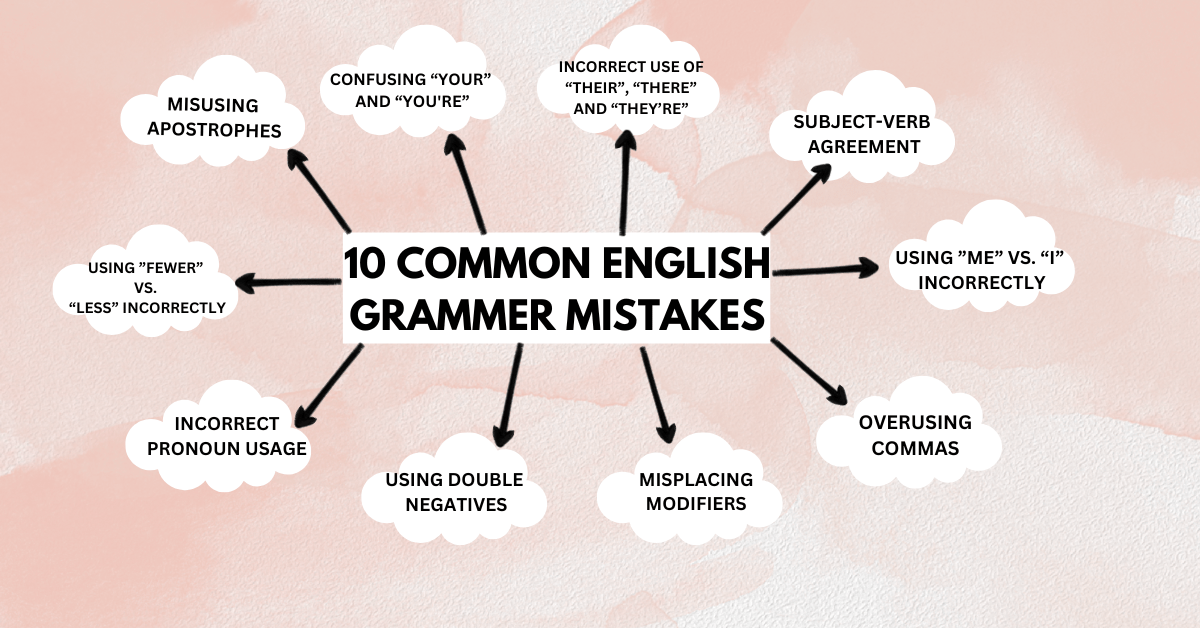
10 Common English Grammar Mistakes and How to Avoid Them

Mastering English grammar can be challenging, especially for non-native speakers. Even advanced learners often stumble over certain grammar rules. Understanding these common English grammar mistakes and learning how to avoid them can significantly improve your English communication skills. The Engvarta App, with its personalized learning sessions and expert tutors, is an excellent tool to help you tackle these errors effectively.

10 Common English Grammar Mistakes and How to Avoid Them

Misusing Apostrophes

Apostrophes are often misused, especially in possessive forms and contractions.

Mistake: Confusing “its” (possessive) with “it’s” (contraction for “it is”).

Correct Usage:

  • “Its tail is long” (possessive).
  • “It’s going to rain” (contraction).

How to Avoid: Practice identifying and using possessives and contractions correctly. Engvarta’s tutors can provide exercises and feedback on apostrophe usage.

Confusing “Your” and “You’re”

These two words sound similar but have different meanings.

Mistake: Using “your” when “you’re” is needed.

Correct Usage:

  • “Your book is on the table” (possessive).
  • “You’re going to love this movie” (contraction for “you are”).

How to Avoid: Remember that “you’re” is short for “you are.” Engvarta sessions can include practice sentences to reinforce this distinction.

Incorrect Use of “Their,” “There,” and “They’re”

These homophones can be tricky.

Mistake: Mixing up “their” (possessive), “there” (location), and “they’re” (contraction for “they are”).

Correct Usage:

  • “Their house is big” (possessive).
  • “The book is over there” (location).
  • “They’re coming to the party” (contraction).

How to Avoid: Engvarta tutors can provide targeted exercises to practice using these words in context.

Subject-Verb Agreement

Ensuring that subjects and verbs agree in number is crucial.

Mistake: “The list of items are on the table.”

Correct Usage: “The list of items is on the table.”

How to Avoid: Regular practice with sentences that involve subject-verb agreement can help. Engvarta offers real-time feedback to correct these errors.

Using “Me” vs. “I” Incorrectly

Choosing between “me” and “I” can be confusing.

Mistake: “Me and my friend went to the store.”

Correct Usage: “My friend and I went to the store.”

How to Avoid: Remove the other person from the sentence to check if “me” or “I” fits. Engvarta tutors can offer exercises to reinforce this rule.

Overusing Commas

Commas are often used incorrectly, leading to comma splices and run-on sentences.

Mistake: “I went to the store, I bought milk.”

Correct Usage: “I went to the store, and I bought milk.” or “I went to the store. I bought milk.”

How to Avoid: Learn the rules for comma usage. Engvarta sessions can include punctuation practice to help you master this.

Misplacing Modifiers

Modifiers should be placed next to the word they modify.

Mistake: “She almost drove her kids to school every day.”

Correct Usage: “She drove her kids to school almost every day.”

How to Avoid: Practice placing modifiers correctly in sentences. Engvarta’s interactive sessions can help identify and correct misplaced modifiers.

Using Double Negatives

Double negatives create a positive statement, which can confuse the meaning.

Mistake: “I don’t need no help.”

Correct Usage: “I don’t need any help.”

How to Avoid: Recognize and avoid double negatives. Engvarta tutors can provide exercises to practice forming negative statements correctly.

Incorrect Pronoun Usage

Pronouns must agree with their antecedents in number and gender.

Mistake: “Each student must bring their book.”

Correct Usage: “Each student must bring his or her book.”

How to Avoid: Ensure pronouns agree with their antecedents. Engvarta offers detailed explanations and practice sentences to master this.

Using “Fewer” vs. “Less” Incorrectly

“Fewer” is used for countable nouns, while “less” is used for uncountable nouns.

Mistake: “There are less people here today.”

Correct Usage: “There are fewer people here today.”

How to Avoid: Practice distinguishing between countable and uncountable nouns. Engvarta sessions can include exercises to reinforce this rule.

How Engvarta Can Help

Engvarta offers a range of features that can help you avoid these common grammar mistakes:

  • Personalized Learning: Engvarta provides one-on-one sessions with expert tutors who can tailor lessons to your specific needs.
  • Real-Time Feedback: During your practice sessions, tutors offer immediate corrections and explanations, helping you learn from your mistakes.
  • Interactive Exercises: Engvarta includes exercises that focus on common grammar mistakes, allowing you to practice and improve continuously.
  • Convenience and Flexibility: You can schedule sessions at your convenience, making it easier to integrate English practice into your daily routine.

Additional Tips for Avoiding These 10 Common English Grammar Mistakes

Read Regularly

One of the best ways to improve your grammar is to read regularly. This exposes you to correct grammar usage in context, helping you internalize the rules.

Write Often

Practice writing to reinforce grammar rules. Whether it’s journaling, writing essays, or even composing emails, the more you write, the better you’ll become at avoiding common mistakes.

Use Grammar Check Tools

There are several online tools like Grammarly that can help you catch mistakes. While they shouldn’t be relied upon exclusively, they can be a great supplementary resource.

Engage in Conversations

Speaking regularly with native speakers or proficient English users can help you identify and correct your grammar mistakes. Engvarta provides a perfect platform for this kind of practice.

Review Grammar Rules

Regularly reviewing grammar rules can help keep them fresh in your mind. Make use of grammar books, online resources, and educational apps to keep learning.

Seek Feedback

Don’t hesitate to ask for feedback on your writing and speaking. Engvarta tutors are there to provide constructive criticism and help you improve.

Benefits of Improving Grammar with Engvarta

Engvarta stands out as a robust platform for improving your English grammar. Here’s how:

Structured Learning Path: Engvarta offers a structured learning path that helps you progress from basic to advanced levels systematically. This ensures that you build a solid foundation and then refine your skills progressively.

Practical Applications: Engvarta’s approach is not just theoretical but also practical. You engage in real conversations, write essays, and practice through interactive exercises, which helps in better retention of grammar rules.

Expert Tutors: The tutors at Engvarta are experienced and trained to handle common grammar issues faced by learners. They provide personalized feedback, which is crucial for overcoming specific challenges.

Flexibility and Accessibility: With Engvarta, you can learn at your own pace and schedule sessions at times that suit you. This flexibility is especially beneficial for working professionals and students with busy schedules.

Confidence Building: Regular practice and feedback help in building confidence. As you see improvement in your grammar, your overall communication skills also improve, making you more confident in speaking and writing English.

Customized Sessions: Engvarta allows you to customize your learning sessions based on your specific needs and goals. Whether you need to focus on writing, speaking, or specific grammar rules, the platform adapts to your requirements.

Continuous Improvement: Engvarta tracks your progress and adapts the difficulty level accordingly. This ensures that you are always challenged and continue to improve without getting overwhelmed.

Conclusion

Avoiding 10 common English grammar mistakes is essential for effective communication in English. By understanding these mistakes and practicing regularly, you can significantly improve your language skills. The Engvarta App is an excellent resource for personalized learning and expert guidance, helping you overcome these challenges and become more confident in your English proficiency. With its structured learning path, practical applications, expert tutors, and flexibility, Engvarta provides a comprehensive solution to mastering English grammar.