31 Interesting Topics to Practice English


Interesting topics to practice English

Practice English with Yourself.

No one’s around you! That’s an ideal time to have self-talk in English 

And if you’re wondering, what to speak. I have a list of topics for you.  

Here how you should proceed :

  1. Make a note of this topic and add them to your self-talk jar. 
  2. Pick one note each day, and then you can start speaking on that topic. 
  3. Don’t forget to record yourself. 
  4. Listen to your recording after a week to assess your progress. For better understanding on how to assess, watch this video :

Here is the list of Interesting topics to practice English :

  1. What are your plans for the remaining days this week?
  2. How would you describe yourself?
  3. Which animal would you like to adopt as a pet and why 
  4. Describe a situation when you were under pressure and how you were able to tackle the problem.
  5. What are your likes and dislikes about using a mobile phone 
  6. When is the most productive hour of the day and why? 
  7. What are the places that you would like to travel to this year?
  8. Who is the person whom you admire the most? 
  9. Who is your inspiration and why?
  10. Do you love reading newspapers or watching the news? Give reasons. 
  11. Do you watch Netflix shows? If Yes, What was the last show you watched? And if No, what do you like doing in your free time? 
  12. What are the hobbies you would like to take up in the future? 
  13. What is the one habit that you think will make you successful? 
  14. Describe one of the best memories of your childhood. 
  15. What are you hoping to achieve by the end of this year & what are you doing to achieve that? 
  16. Do you find it hard to trust yourself? 
  17. What do you like about being an introvert/extrovert/ambivert?
  18. Which one do you choose? Beaches or mountains. Why?
  19. Which one do you prefer? Online or offline shopping. Why? 
  20. What is the biggest mistake you have made in your life?
  21. What is the biggest lesson that you have learned from life?
  22. What is the best memory of life so far?
  23. Describe your best friend. 
  24. Are you a team player or a lone wolf? And why
  25. What do you love about Indian food?
  26. What is the best decision you have ever made?
  27. What was the strangest dream you ever had? 
  28. Narrate the most inspiring story you’ve ever heard?
  29. What is your opinion on the Education system?
  30. What’s the secret to your success? 
  31. What is the suggestion that you would like to give to your younger self? 

Important :

Now make sure when you’re speaking on these topics, you don’t just speak a few sentences and stop. That wouldn’t help you. Go into detail & talk about why, how it made you feel. Elaborate as much as you can. Your target should be to speak for at least 4 to 5 minutes per topic.

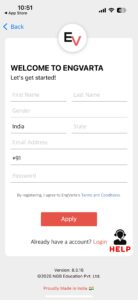
If you’re getting stuck with just one line answer and don’t know how to express yourself on these topics or any other topics in English then you must go to the EngVarta app – where experts can help you to express your thoughts and emotions in English. They will correct your mistakes and guide you along the way on how to frame better sentences using proper words. 

You can download the EngVarta app from here.

If you have any other topics to suggest, put them in the comments & we will add them to the list for others. Thank you for reading. All the Best.

Still Thinking in Hindi Before You Speak English? Here’s How to Stop

Still Thinking in Hindi Before You Speak English? Here’s How to Stop

Do you ever catch yourself translating from Hindi to English in your head before you speak?

You’re not alone.

Many English learners — especially in India — go through this exact struggle. You know the words, you understand the grammar, but when it’s time to speak… you pause. You think in Hindi first. Then slowly, you try to turn it into English.

This habit is one of the biggest reasons behind hesitation and slow speech.

In this blog, let’s dive into why you’re still thinking in Hindi — and more importantly, how to train your brain to think directly in English.

Why You’re Still Thinking in Hindi

Here are a few common reasons why this habit develops:

1. Hindi is your default setting

It’s the language you use for emotions, daily life, thoughts — everything. Your brain is hardwired to think in it.

2. English was taught as a subject, not as a skill

You’ve studied English grammar and vocabulary, but you weren’t encouraged to use it in real conversations.

3. Fear of making mistakes

We often think in Hindi because we feel more confident forming a thought in our mother tongue first, and then translating. That translation step is what causes hesitation.

But here’s the thing — you can change this.

You can reprogram your thinking pattern, and it doesn’t take a language degree — it just takes consistency and the right exercises.

How to Stop Thinking in Hindi While Speaking English

Let’s break it down into daily, practical habits.

1. Train Your Eyes and Mind

Wherever you are, look around and name things in English.

“Fan. Table. Plant. Phone. Water bottle.”

Then move to small phrases:

“The fan is running.”
“The bottle is empty.”

This builds an English vocabulary for your everyday surroundings — without depending on Hindi.

If you feel your vocabulary is limited, start expanding it with simple yet powerful words. You can check out this list of 50 simple English words to boost your vocabulary and begin adding them to your daily thoughts.

2. Narrate Your Routine

Talk to yourself in English as you go through your day.

  • “I’m brushing my teeth.”

  • “Let me check my phone.”

  • “Time to cook dinner.”

This constant narration helps you think directly in English without translating in your head.

3. Express Emotions in English

Instead of saying “Mujhe gussa aa raha hai” in your head, say:

“I’m feeling angry.”
“I’m annoyed right now.”
“I’m super excited about this!”

Practicing emotional vocabulary is a powerful way to switch your internal language from Hindi to English.

4. Use the “Slow & Speak” Technique

When someone asks you something in English, don’t panic.
Don’t rush to translate.

Just pause for 5 seconds, think slowly in English, and then respond.

Speed doesn’t equal fluency — clarity of thought does.

5. Don’t Aim for Perfection

Trying to speak perfect English will keep you stuck in the translation loop.

Instead:

  • Speak simply.

  • Use short sentences.

  • Make mistakes — it’s how fluency is built.

Nobody learned English by only thinking about grammar. People learn it by using it daily.

The 7-Day Challenge to Break the Habit

Try this challenge for the next 7 days:

🗓️ Choose one activity each day (walking, cooking, scrolling Instagram)
🗣️ Narrate your thoughts in English only
⏱️ Don’t allow yourself to think in Hindi during that activity

You’ll be amazed at how quickly your brain adjusts.

Your Thoughts Shape Your Fluency

Fluency isn’t just about speaking.

It’s about how you think.

When you’re still thinking in Hindi, English will always feel like a second language. But once your thoughts start flowing in English — even broken English — that’s when real fluency begins.

And the truth is: you already know enough English to begin this journey.

All you need now is practice and a little courage to speak, even if it’s not perfect.

Want to Practice English Without Feeling Judged?

If you’re ready to stop thinking in Hindi and finally start thinking in English, try the EngVarta App.

EngVarta helps you practice live English conversations with experts — so you can stop overthinking and start speaking fluently and naturally.

No books. No boring grammar drills. Just real talk.

How To Talk With A Fellow Teacher On Your First Day Of School?

How To Talk With A Fellow Teacher On Your First Day Of School?
  • Teachers are an integral part of our life, at various stages of one’s life the role of a teacher or a mentor is unquestionable. Taking the responsibility of a teacher is not a child’s play, the future of many lives is in your hands.
  • Therefore, we salute all teachers and send across warm wishes and hugs along with congratulations to all the young teachers out there, who are stepping in the world of education providers.
  • We understand your nervousness for your first day as a teacher and you need to make a good impression not just for students, but also for your fellow teachers thus we offer our services to make this day as memorable as possible.

During your teaching career, you will get an opportunity to meet many teachers who will teach you something new and sometimes you’ll teach them. And its foundation will begin right from your first day when you will meet your fellow teachers and talk to them.
Don’t spoil this opportunity of making an impression just because you are nervous or aren’t confident.

Let us all take you through some basic communication tips for your first day at school.

1. Greet everyone well

Well, this is “the basic etiquette” to follow each day, every day with everyone. When you go to the Staff room or you are introduced to fellow teachers, then you should say Good Morning or hello with a smile.

Making a firm handshake is often taken as a sign of confidence. So, when you are meeting someone individually, then tell your name while shaking hands with them. Please note that if someone has already introduced you, do not repeat your name, just say hello and ask how you are?

Most importantly, always keep a smile on your face and make an eye contact while greeting them. Making an eye contact while conversation demonstrates your confidence and builds a little trust level.

2. Conversation starters

Mostly, the other teacher will start the conversation first out of curiosity. They will be interested in knowing about your college, your education, how are you feeling, how did you find the school, etc. Pre-prepare the answer to such questions beforehand so that you can answer them confidently.
Keep your answers brief, not too small and not too long either.

Let’s just say they do not start the conversation first and it comes up to you, pre – prepare what you can ask as well to avoid awkward silences. Your questions can start from how they are doing? As you haven’t already asked that.

Next, ask them about the class, subject they teach, how long they have been teaching and all. Make sure to include some questions related to attendance sheet, coursework, school rules, etc. while you are at it, as this will reflect your sincerity towards your job.

Now take care of two things here –

Firstly, do not ask any personal questions like their marital status or kids etc.. Or school related questions like how’s the school or does the salary come on time or not, as these questions might make the other person uncomfortable.
Secondly, do listen carefully when someone is answering your questions. For one, you will get new questions to ask. For example, if they say that they have studied in Punjab, you can always quote the obvious question about the food of Punjab.

On the other hand, you can easily predict whether the person in front of you have any interest in talking to you or not. If he doesn’t respond properly or not interrogating you for anything, then you should be silent.

3. Show your nervousness

Not just this helps making you a better impression, but arriving early allows you to reign in your anxiety and prepare yourself for the interview. No one wants to see a sweaty person walking in and apologizing for the delay.
Arriving on time also reflects upon your commitment for the job. Please note before time means 15 – 20 minutes before the scheduled time. No one would appreciate you for sitting on the office stairs waiting for them while the office is still getting cleaned.

For Regular English Practice with Expert: Download EngVarta Mobile App

playstoreitune


How to Impress a Girl on Your First Date with Your English

A Role Play

How To Impress A Girl On Your First Date With Your English

You dressed well. You showed up on time. You smelled great.

But the moment you opened your mouth to talk — the vibe dropped.
Awkward silences. Confused expressions. Cringy phrases.

Welcome to the world of first date English fails.

If you’re someone who understands English but struggles to speak fluently during real conversations — especially when nerves are high — this blog is your cheat code.

We’ll guide you through:

  • A fun yet honest roleplay example

  • The most useful conversation topics and questions for a first date

  • English phrases that sound natural, not robotic

  • Tips to express yourself with confidence and warmth

How to Speak English Confidently on a First Date

Why Speaking English on a Date Feels So Hard

It’s not because your grammar is weak.
It’s not because you lack vocabulary.

The real issue?
You’re thinking in your native language while trying to impress in English.
You’re translating in real time — and that creates awkward pauses, wrong phrases, and miscommunication.

And on a first date, seconds matter.
The way you speak can either build a connection or break the vibe.

The Date That Crashed (Roleplay #1 – What Not to Say)

Let’s start with a fictional but familiar scene between Vanesha and Rohan — a great-looking pair with zero conversational chemistry.

Full dialogue retained from previous version…

What went wrong recap:

  • Too much Hindi-English mixing

  • Poor listening and lazy replies

  • No curiosity or follow-up questions

  • Mistranslation that led to embarrassment

  • Absolutely no awareness of the moment

Best First Date Conversation Topics and Questions

Now let’s talk about the secret sauce: engaging, respectful, and safe topics that build comfort and connection.

Avoid talking about money, politics, religion, or anything too personal in the first 10 minutes. Start light and warm.

Here are some golden conversation topics and questions you can use:

🧑‍🎓 Personal interests

  • “What do you usually do when you have free time?”

  • “Is there a hobby you’ve picked up recently?”

🍲 Food & Drinks

  • “Are you more into chai or coffee?”

  • “What’s your go-to comfort food?”

🧳 Travel & Places

  • “What’s one place you’d love to visit?”

  • “Mountains or beaches — what’s your type?”

🎬 Entertainment

  • “Watched anything interesting on Netflix recently?”

  • “Do you prefer books or movies to unwind?”

👨‍👩‍👧‍👦 Family & Background

  • “Do you live in a joint family or nuclear?”

  • “What’s something you learned from your parents?”

💭 Dreams & Life Goals

  • “If money wasn’t a factor, what would you love to do?”

  • “What’s one thing you want to try this year?”

These conversation topics and questions open doors to real stories, shared interests, and meaningful moments — the things that make first dates memorable.

The Ideal First Date Conversation (Roleplay #2 – What to Say)

Let’s now see what the same date could’ve looked like if Rohan knew how to listen, express, and lead with curiosity.

Full ideal conversation retained from earlier.

Notice how the tone is polite, curious, and emotionally available.
That’s what builds attraction — not perfect English, but a real effort to connect.

English Phrases That Make a Great First Impression

Let’s break down some useful phrases you can practice before your next date:

What You Want to Say Say This Instead
“Kya hobbies hain?” “What do you enjoy doing in your free time?”
“Bahut garmi hai” “The heat today is intense, right?”
“Order kare?” “Shall we order something?”
“Mujhe chai chahiye” “I’d love a cup of tea — do you have a favorite?”
“Main cricket dekhta hoon” “I enjoy watching cricket — especially test matches.”

These are small changes, but they make a huge difference.
You go from sounding casual or careless… to sounding intentional and present.

If you want to level up your word choice and sound more fluent in everyday conversations, check out our blog: Boost Your Vocabulary: 50 Simple Words to Add

✅ First Date English Conversation Tips

Here are some simple tips that can instantly boost your confidence:

1. Start with a compliment

It could be about their smile, their voice, or even the place they chose.

“This café is lovely — you have great taste!”

2. Smile when you speak

It softens your English and helps the listener feel relaxed.

3. Ask open-ended questions

Don’t ask things that can be answered with a simple “yes” or “no.”

4. Avoid negative or controversial topics

No need to bring up bad weather, traffic, or your ex!

5. Don’t fake fluency — speak slowly and clearly

Even simple English can sound great if spoken with confidence.

Practice Makes Confidence (Not Just Perfect)

Think of English like dancing.

You can memorize all the steps…
But if you don’t practice moving to the rhythm, you’ll always feel off-beat in real conversations.

The only way to feel fluent on a first date is to practice speaking out loud — regularly.

Want to Practice Before Your Next Date?

Use the EngVarta App to speak English every day with live experts who won’t judge, laugh, or interrupt.

Just real practice. Real people. Real growth.

✅ Start with a free trial call
✅ Talk anytime from 7 AM – 11:45 PM
✅ Build confidence without the pressure of a classroom

For Regular English Practice with Expert: Download EngVarta Mobile App

playstoreitune

Bonus Practice

Follow us for daily lessons, fun roleplays, and tips that sound like real life — not textbooks:

📸 Instagram
🎥 YouTube

Final Thought

It’s not the accent. It’s not the grammar.

It’s the effort.
It’s the curiosity.
It’s how well you listen and how warmly you respond.

Your English doesn’t need to be perfect to impress someone.
But your presence does.

And if you ever feel nervous before a date — just remember:
Fluency is just connection with clarity.
And you’re already closer than you think.

10 Best English Speaking Courses Online in 2025 (With Real Practice Options)

10 Best English Speaking Courses Online in 2025

Learning English in 2025 is no longer just about memorizing grammar rules or binge-watching YouTube videos. If your goal is to speak fluently, you need a course that offers real-time speaking practice, feedback, and consistent engagement. But with so many options, how do you choose?

In this blog, we’ve compared the most popular and best English speaking courses online based on:

  • Speaking Practice Quality
  • Expert Interaction
  • Flexibility & Ease of Use
  • Price & Affordability

Whether you’re looking for the best English app to speak fluently, or want to know how to speak English confidently online, this blog will help you choose from the top spoken English practice apps in India. These are some of the best English speaking courses online that offer results.

Here’s a detailed side-by-side comparison to help you make an informed decision.

Comparison Table​​

Platform

Practice Method

Best For

Price Range

Unique Feature

Pros

Considerations

EngVarta 1-on-1 phone calls with English experts Fluency, confidence, real-world speaking ₹ Affordable Live conversations + expert corrections Human interaction, budget-friendly, real-time feedback, no video pressure
Very focused on speaking – great if that’s your top goal
Cambly 1-on-1 calls with native speakers Accent training, advanced learners $$$ Expensive Native tutors with flexible scheduling Native speakers, wide tutor pool, flexible hours
Higher pricing; may feel less structured for beginners
Duolingo Gamified exercises Vocabulary & beginners Free/₹ Paid Bite-sized lessons, engaging UX Fun, habit-forming, good starting point
Lacks real-time speaking practice
British Council Modules + live classes Structured learners & certifications $$ Moderate Globally recognized certification Professional setup, trusted globally, includes live instruction
Feels academic; may not suit casual learners
Udemy Pre-recorded video courses Self-paced grammar improvement ₹ Low Lifetime access with 1-time purchase Affordable, flexible, huge course variety
Doesn’t offer live classes or speaking practice
FluentU Immersive video content Listening & casual expressions $$ Moderate Learn through real-world video clips Learn from context, exposure to native expressions
No live practice; mostly passive listening
Preply Private tutors on demand Personalized learning $$ – $$$ Choose tutors by skill, price, and reviews Customized learning, wide tutor selection
Quality varies; consistency depends on tutor
Hello English App with Indian language support Beginners from regional backgrounds Free/₹ Paid Bilingual support + grammar games Regional support, good grammar basics, interactive UI
Not ideal for advanced learners or real-time fluency
ELSA Speak AI speech recognition Pronunciation improvement $$ Moderate Feedback on pronunciation using AI Great for clarity and accent training
Limited to pronunciation; no conversation practice
YouTube/Podcasts Passive listening & learning Free resources and casual tips Free Great for supplementing active speaking practice Unlimited content, free, varied styles
No feedback loop; lacks progression or structure

Quick Course Snapshots

If you’re on the hunt for the best English speaking course online, here’s how each one compares:

  1. EngVarta

    If you already know English but struggle to speak fluently, EngVarta is built for you. You speak with live experts daily via phone calls. No recordings, no awkward video calls. Just real conversations and gentle corrections to boost your confidence.

  2. Cambly

    Great for interacting with native speakers and refining your accent. Cambly is flexible and offers a wide range of tutors, but it’s one of the most expensive options.

  3. Duolingo

    Best suited for absolute beginners. While you won’t get any real conversation practice, it’s helpful for vocabulary building in a fun, gamified way.

  4. British Council

    Highly structured with options for live sessions. Best for learners who need certification or want a formal learning experience.

  5. Udemy

    A budget-friendly choice. You get video-based courses from experienced teachers. Not interactive, but great for grammar and comprehension.

  6. FluentU

    Uses pop culture, movie clips, and news to help you learn English naturally. Great for listening skills and learning native expressions.

  7. Preply

    Flexible platform to connect with a variety of tutors. You can filter by price, accent, language, etc. Personalization is key, but quality varies.

  8. Hello English

    Especially useful if you are from a non-English background and prefer bilingual explanations. It uses gamified lessons for vocabulary and grammar.

  9. ELSA Speak

    AI-powered app that listens to your pronunciation and gives real-time feedback. Great for accent training, not for fluency or conversation.

  10. YouTube & Podcasts

    Thousands of free channels to follow. Ideal for passive learning, inspiration, or tips, but lacks structured progression or feedback.

Conclusion: Which One Should You Choose?

If you want to actually speak English every day, choose platforms like EngVarta or Cambly that provide real interaction.

  • Budget-friendly + real practice? Go with EngVarta
  • Native interaction + advanced accent focus? Try Cambly
  • Self-learners or grammar buffs? Explore Udemy or British Council

No matter your goal, there’s a best English speaking course online to match your needs.

Remember: Watching content won’t make you fluent. Only speaking will.

Frequently Asked Questions

Want to Study or Work Abroad? Start with IELTS Exam

Want to Study or Work Abroad? Start with the IELTS Exam

For anyone dreaming of settling abroad — whether for higher education, career opportunities, or migration — there’s one bridge you simply can’t skip.
That bridge is called: IELTS.

It’s not just a test.
It’s the first step towards your global journey.

The IELTS Exam (International English Language Testing System) is one of the world’s most popular English proficiency tests, accepted by over 11,000 organizations globally. It is designed to assess how effectively you can communicate in English across four core skills: Listening, Reading, Writing, and Speaking.

Whether you’re planning to study at a university abroad, apply for a job in an English-speaking country, or migrate permanently, the IELTS Exam is often a mandatory requirement in the process.

There are two main types of IELTS:

  • IELTS Academic – for those applying to universities or higher education programs

  • IELTS General Training – for work, training programs, or immigration purposes

Both versions are trusted by governments, employers, and institutions worldwide. Taking the IELTS Exam shows your readiness to live, work, or study in an English-speaking environment and is a vital first step toward your global journey.

The Four Pillars of IELTS: Listening, Reading, Writing, and Speaking

The IELTS Exam is divided into four sections, each designed to assess a specific skill:

1. 🎧 Listening

You’ll hear recordings of native English conversations, lectures, and instructions. You’ll need to answer questions to show how well you understood the context and details.

2. 📖 Reading

Three long texts — could be academic articles or general interest materials — and 40 questions that test your comprehension, scanning, and interpretation skills.

3. ✍️ Writing

This section includes two tasks. In the Academic version, Task 1 involves analyzing a graph or chart, while Task 2 is a formal essay. General version includes letter writing and essay.

4. 🗣️ Speaking

This is a face-to-face interview (or now via video call in many centers). You’ll speak on general topics, express opinions, and answer cue card-based questions — exactly like in the real IELTS Exam.

Why is the IELTS Exam Important?

It’s globally accepted
More than 11,000 institutions in over 140 countries trust IELTS scores.

It unlocks education & career opportunities
A high IELTS score can improve your chances of getting admitted to top universities or landing international jobs.

It supports migration
Countries like Canada, Australia, the UK, and New Zealand use IELTS scores for visa and immigration eligibility.

It’s a mark of language confidence
Preparing for the IELTS Exam doesn’t just help you pass the test — it also builds your real-world communication confidence.

Meet FixoLang: The Smart Way to Practice for IELTS Speaking

Among all the sections, most candidates struggle with speaking.
Why? Because fluency comes from practice — and practice requires guidance, feedback, and repetition.

That’s where FixoLang becomes your best companion.

What is FixoLang?

FixoLang is an AI-powered app designed to help you prepare for the IELTS Speaking section effectively and independently.
It’s like having a private IELTS speaking coach — in your pocket.

How Does FixoLang Work?

Step 1: Choose a Topic
Select from a vast cue card library filled with real IELTS-style prompts. From common questions to trending topics, you’ll find everything that mirrors the actual exam.

👉 Want to see what kind of topics usually appear in the test? Check out these Top 20 IELTS Speaking Cue Card 2025 Questions to get an idea of what to expect and start preparing smartly.

Step 2: Speak
The app records your response in real time. You speak your answer just as you would in the real IELTS Exam.

Step 3: Get Instant Feedback
Within seconds, FixoLang gives you:

  • An estimated band score

  • Feedback on your grammar, pronunciation, fluency, and coherence

  • Suggestions to improve your weak areas

And you can repeat your answer as many times as you like — until you feel confident.

Real Success Stories: How FixoLang Changed Lives

Users across the globe have shared how FixoLang has made a tangible difference in their speaking skills. By incorporating it into their IELTS Exam preparation routine, many have seen remarkable improvements in their scores, showcasing the app’s effectiveness in real-world speaking scenarios.

Final Words: Start Your IELTS Journey Today

Studying or working abroad is not just a dream — it’s a decision.
And like every big journey, it starts with a simple step.

👉 That step is preparing for the IELTS Exam.
And the smartest way to prepare, especially for the speaking section, is by practising daily with FixoLang.

Don’t just study English.
Start speaking it confidently, fluently, and with purpose.

🔗 Ready to Begin? Download FixoLang Now:

📱 Download on App Store: https://apps.apple.com/in/app/fixolang-ielts-prep-app/id6448477499
📱 Get it on Google Play: https://play.google.com/store/apps/details?id=ielts.engvarta.com&hl=en_IN&pli=1
▶️ Watch IELTS tips on YouTube: https://www.youtube.com/@FixoLang
📸 Follow us on Instagram: https://www.instagram.com/fixolang/

Frequently Asked Questions

  • Can I track my progress?
    • Yes, after every session you get a band score and feedback so you know exactly where you stand and how to improve.

  • How often should I practice?
    • Just 15 minutes a day is enough to see improvement. The more consistently you practice, the better your fluency and score.

  • Can beginners use FixoLang?
    • Definitely! It’s beginner-friendly and perfect for shy users. You practice with AI, so there’s no fear of judgment or pressure.

  • Is FixoLang only for Speaking?
    • Yes, it’s currently focused on IELTS Speaking practice. More features for Listening, Reading, and Writing are coming soon.

  • How does FixoLang help with IELTS?
    • FixoLang gives real IELTS cue cards, AI-powered feedback, and instant band estimates to help improve your speaking fluency and confidence.


Earn Money by Teaching English to Learners on Phone


Become an English Expert

Work as an English Expert with EngVarta and get paid by talking to English Learners

Do you wish to monetize your fluent English speaking skills by utilizing your idle time? 

Look no further!

We are looking for English Experts or English teachers who can help our learners improve their English communication skills by talking to them over one-on-one phone calls. 

If you think you can help our English learners achieve their goals – Join EngVarta now !

EngVarta is an English learning app and a place to practice English communication. With the tap of a button, our users get connected with an English expert like you. For every session you take as an expert in our app, you will be paid for it. Whenever you are free, just make yourself available in the app and start giving sessions to users.

Why Join us?

✅ Work from Home

No classroom. No commute. Just a mobile phone, headphones, internet, and a quiet space.

✅ Only Audio Calls — No Video

Your sessions are private and audio-only. No physical appearance or camera needed.

✅ Flexible Hours

You decide your schedule! Work anytime between 7 AM and 12 AM IST, with just 4 hours minimum daily commitment.

✅ Earn Per Minute

You’re paid for every minute you speak. More calls = more earnings. Income is credited monthly.

✅ Complete Anonymity

Experts and users are identified by nicknames. Your privacy is protected.

✅ Impact Real Lives

You’ll help learners crack interviews, deliver office presentations, or simply talk without hesitation.

How can you apply as an English Expert? 

Step 1: Download the EngVarta App

Begin by downloading the EngVarta app from your device’s app store:

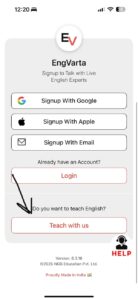
Step 2: Open the App and Tap on “Teach with Us”

After installing, open the app. On the welcome screen, you’ll find the “Teach with Us” option. Tap on it to initiate your application.

IMG 4B1B297B9418 1

Step 3: Fill Out the Application Form

You’ll be prompted to complete an application form. Provide accurate details about your background, experience, and availability. This information helps EngVarta assess your suitability for the role.

EngVarta Form

Step 4: Submit a Video Recording

A crucial part of the application is submitting a Video recording. This allows the EngVarta team to evaluate your pronunciation, fluency, and clarity.

Step 5: Await Feedback

Once you’ve submitted your application and video recording, the EngVarta team will review your materials. If shortlisted, you’ll be contacted for the next steps, which may include an interview or further instructions.

✅ Tips for a Successful Application

  • Ensure Clarity: Use a good-quality microphone and record in a quiet environment.
  • Be Honest: Provide truthful information about your experience and availability.
  • Demonstrate Enthusiasm: Show your passion for teaching and helping others improve their English skills.

Who can apply? 

Anyone with:

  • Fluent English speaking skills
  • Clear pronunciation and good vocabulary
  • Empathy, patience, and great listening skills
  • A passion for helping people
  • A phone, internet, and a quiet environment

You don’t need a teaching degree — just natural confidence in English.

FAQs

How to Learn Reading, Speaking, and Writing English?

How to Learn Reading, Speaking, and Writing English?
  • Have you ever wondered why does everyone emphasize on learning English?Though there are thousands of languages spoken across the world, people only care about learning English. Why? Well, it is because English is a universal language. This language is widely spoken across every corner of the world. But, how did it become a universal language? The existence of English as a universal language can be blamed to the British, who played a major part in spreading this language. The United Kingdom was the first industrialized nation. To raise itself on the global radar and spread its power, the country went on colonizing other nations. The British Empire acquired North America, Australia, New Zealand, the Caribbean, South Asia, major parts of Southern and Western Africa, and some parts of South-East Asia. During this stint, the UK established English-speaking systems in the industry, as well as government. This made English a popular language in every part of the world and it became a universal language. Till today, English is considered as the most powerful language. People want to learn it because it gives them an edge on the personal, social, and professional front. If you too want to gain an edge over others, you must learn English. We have some of the best English learning tips to share with you.

Studying, Learning, Writing, and Speaking English Efficiently

Studying English efficiently is not at all a big task. You can easily learn it and get a good grip on the language. It has no noun genders, no tone system, and no complicated morphology. Once you understand the basic and put an extra effort, you can easily speak and write the language effectively.  You just need to focus a little and follow the below-mentioned tips to learn English.

  • Tell yourself that making mistake is okay

The fear of making mistake is the first hurdle that stops everyone from speaking any language fluently. You must understand that it will take some time to be fluent and you can only become fluent if you gracefully accept the fact that you might make some mistakes at the beginning, be it English or any other language.


Talking solely about English, there are many common mistakes that a non-native English speaker makes, for instance, the usage of “a” and “the”, the pronunciation of “th”, usage of double negatives, counting the uncountable, confusing between he/she and him/her, etc.


If you let go of your fear of making mistakes and begin speaking confidently; gradually, you would be able to speak fluently without making any mistake. You just need to give a start and be okay about committing mistakes.


  • Take help from the media

The media is a powerful tool to enhance your knowledge pertaining to language. The access to English media makes it easy to learn and practice the language. English is a universal language. Movies, TV series, and music in this language are easily available. You can take their help to learn the language and practice.


There are several movies that help in learning different easy and complicated words. For instance, Jurassic Park helps you to learn some fancy scientific words, Notting Hill helps to you imbibe the British, as well as American English, Men in Black helps you to learn the cool and simple language, etc. There are several other movies that you can watch to improve your English including Black Sheep, The Queen, The Hunger Games, The King’s Speech, Clueless, The Lord of the Rings, Titanic, Harry Potter Series, and the list is endless. You can select any interesting movie to hone your English speaking skills.


Coming to the TV series, you can watch anyone from Game of Thrones, Strange things, Vikings, the Flash,  Tuders, Friends, Sherlock, Sex and the City, Home and Away, The Simpsons, Shortland Street, Prison Break, Breaking Bad, The Big Bang Theory, How I Met Your Mother, Mad Men, The Office, Desperate Housewives, Misfits, etc.


You can also listen to the English music and learn many new words.


  • Read Good Books

Reading vocabulary rich books is a sure shot way of enhancing the English speaking, as well as writing skills. There are several books that are amazingly rich in content. They are the best ways to learn many new and fancy words and to learn sentence formation.


Many authors have their own way of depicting stories. They unfold the story in the most surreal way. They use fancy words and long sentences that come together to enhance the appeal of the language. With these books, you can also improve your writing skills. You can observe their writing pattern and pick-up from them. You can learn to write long sentences in beautiful manners.


You must start with reading self-help books on improving the English communication skills. These books will help you understand the basics. Once you are done with the basics, you can graduate to the next level. You can read novels by some of the most celebrated authors. You can read books like The Wind in the Willows by Kenneth Grahame, High Fidelity by Nick Hornby, The Old Man and the Sea by Ernest Hemingway, Lord of the Flies by William Golding, Tuesdays with Morrie by Mitch Albom, The Curious Incident of the Dog in the Night-Time by Mark Haddon, Charlotte’s Web by E.B. White, The Outsiders by S.E. Hinton, Thirteen Reasons Why by Jay Asher, etc.


  • Use websites and applications

If you are looking for other ways than watching media or reading books, you can use the websites and applications to learn basic and advanced English conversational skills.


Websites and applications qualify as the best modes of learning English for those who want a virtual speaking partner. These modern modes offer English-speaking partners to the people who want to learn English. The partners not just help with grammar and vocabulary but also help with pronunciation.


There are several effective interactive websites like BBC Learning English, Babbel, British Council, Duolingo, FluentU, Livemocha, English Central, Phrasemix, etc.


The best applications for learning English include Hello English, Duolingo, Lingbe, Memrise, busuu, Learn English Daily, Beelinguapp, English Speaking Practice, HelloTalk, EngVarta. Almost all these apps are compatible with Android, as well as iOS operating systems.


EngVarta is one of the most sought-after apps for learning basic and advanced English. This app works on Android phones, iPhones, tablets, etc. Via this app, you can connect to the English-speaking experts who help you to eradicate your fear of speaking English, inculcate confidence, and refine your English communication skills.


  • Play games

There are many interesting board games that introduce you to new words. You can play these games and solve crosswords and other puzzles to learn new words and boost your English.


Games and puzzles are the best ways to know and memorize vocabulary. These games also help you with spellings and hence, help in sharpening your English writing skills.


Once you start following the above-mentioned tips and tricks, you will see yourself writing and speaking English confidently and fluently. You will soon realize that you no longer fear visiting  lawyers or doctors, you no longer fear walking up to the people and talking about anything and everything, you no longer fear filling long forms, and you no longer turn the subtitles on while watching English movies or TV shows. You will realize that the people around you no longer change their language to make you comfortable as you will see yourself comfortable with the language they all are speaking. When you see these changes in yourself, you would know that you have mastered the language.

For Regular English Practice with Expert: Download EngVarta Mobile App

playstoreitune


The Best English Learning Apps for Beginners: A Comprehensive Guide


best English learning apps for beginners


In today’s interconnected world, English has become the lingua franca of communication. Whether you’re a student, professional, or traveler, having a good command of English opens up numerous opportunities. Fortunately, with the advent of technology, learning English has become more accessible and convenient than ever. English learning apps provide a flexible and interactive platform for beginners to enhance their language skills. In this comprehensive guide, we’ll explore some of the best English learning apps available, including the highly acclaimed EngVarta app.

Duolingo

Duolingo is a widely popular language learning app that offers interactive lessons for beginners. Its gamified approach makes language learning fun and engaging. With Duolingo, users can practice reading, writing, listening, and speaking skills through bite-sized exercises. The English learning app provides personalized feedback and progress tracking, ensuring a structured learning experience.

EngVarta

EngVarta is an innovative English learning app that specifically focuses on improving spoken English skills. It provides users with one-on-one English practice sessions with live English experts. Through audio and video calls, learners can engage in real-time conversations, receive personalized feedback, and gain confidence in their speaking abilities. EngVarta’s interactive sessions simulate real-life scenarios, making it an effective English learning app for beginners to overcome language barriers.

Babbel

Babbel is a user-friendly English learning app that caters to beginners with its practical approach to language learning. It offers a wide range of interactive lessons, covering vocabulary, grammar, and conversational skills. Babbel emphasizes real-life scenarios, helping users gain confidence in speaking English. The English learning app also provides offline access to lessons, making it convenient for learners on the go.

HelloTalk

HelloTalk takes a unique approach to language learning by connecting learners with native speakers of English. This language exchange English learning app allows users to engage in real conversations with native speakers through voice calls, text messages, and audio recordings. Beginners can practice their speaking and listening skills while gaining cultural insights from their language partners.

Rosetta Stone

Rosetta Stone is a renowned name in language learning, and its English learning app is equally impressive. It focuses on immersive learning, employing speech recognition technology to provide real-time feedback on pronunciation. The app incorporates various activities, such as interactive lessons, games, and audio exercises, to help beginners develop their language skills effectively.

Conclusion

English learning apps offer a convenient and effective way for beginners to enhance their language skills. Whether you prefer gamified lessons, immersive experiences, or interactive conversations, there is an app suited to your learning style. Duolingo, Rosetta Stone, Babbel, and HelloTalk are among the top English learning apps that cater to beginners’ needs. In addition, the EngVarta app stands out by providing personalized spoken English practice sessions with live tutors, enabling learners to gain fluency and confidence in their spoken English skills.

As a beginner, exploring these English learning apps and finding the one that resonates with your learning style can significantly accelerate your progress in mastering the English language. Embrace the power of technology and embark on your English learning journey with these top-rated apps!

Remember, practice is key, so make sure to dedicate regular time to engage with these English learning apps and maximize your language learning potential. Happy learning!

Learn English Articles: A, An, The in Just 5 Minutes

Learn English Articles: A, An, The in Just 5 Minutes

Have you ever paused mid-sentence because you weren’t sure if it’s “a umbrella” or “an umbrella”?
Or hesitated while texting someone because you didn’t know if it’s “a apple” or “an apple”?

Tiny words like A, An, and The may seem harmless — but they can seriously mess with your confidence if you don’t know how and when to use them.

And here’s the truth: even fluent English speakers sometimes second-guess these little words.

But not after today.

In this blog, we’ll break down the grammar behind A, An, The, share real-life examples (not boring ones), and even show you when you don’t need to use articles at all. No memorization. Just logic, sound, and some fun examples.

Oh — and there’s a short video waiting for you that brings it all to life 👇
Ready? Let’s go.

👉 If you’re just starting your English journey, this guide on the best English learning apps for beginners will help you get the right tools — and mastering A, An, The is a great place to begin.

Definite Article: “The”

“The” is called the definite article because it points to a specific thing that both the speaker and listener know about.

If you’re using “the”, you’re not talking about anything—you’re talking about that one particular thing.

Use “The” when:

  • You’re referring to something unique or already mentioned
  • There’s only one of something
  • You and the listener both know what you’re talking about

Real-Life Examples:

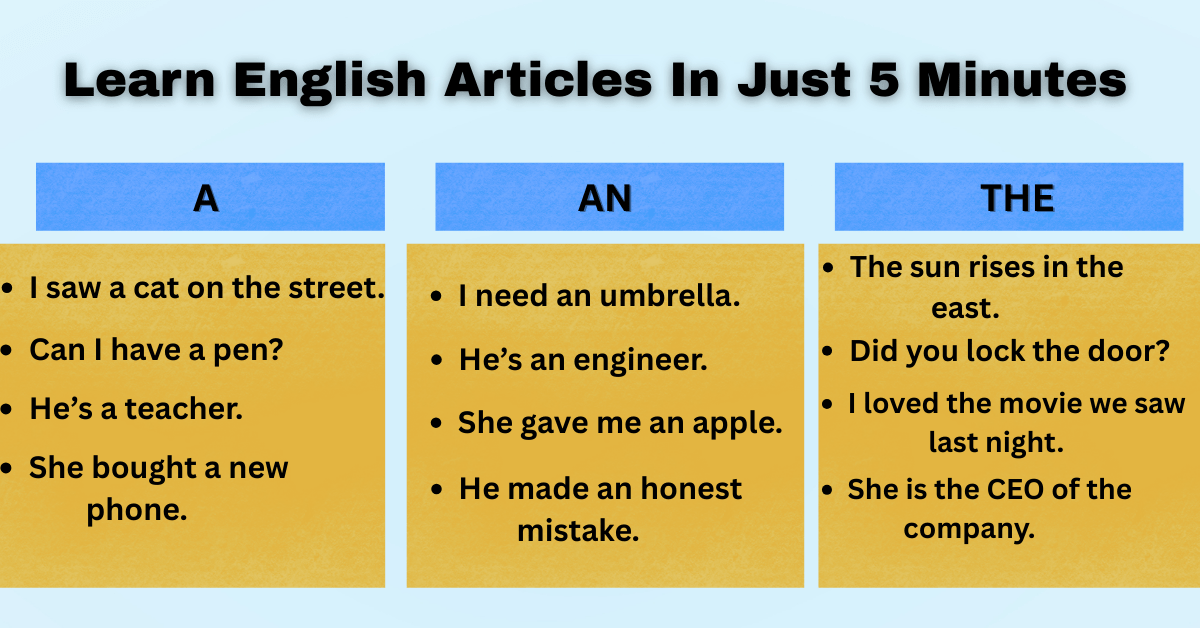
  • “The sun rises in the east.”
    → There’s only one sun. It’s universal. So we say the sun.
  • “Did you lock the door?”
    → The person you’re talking to knows which door. It’s not just any door.
  • “I loved the movie we saw last night.”
    → You’ve already talked about this movie. It’s not a random one.
  • “She is the CEO of the company.”
    → There’s only one CEO. Only one company being referred to.

Bonus Tip:

Use “the” before:

  • Superlative adjectives: the best, the tallest
  • Musical instruments: the guitar, the piano
  • Oceans, rivers, and deserts: the Ganga, the Himalayas, the Sahara

Indefinite Article: “A”

“A” is used when you’re talking about any one item, but you’re not being specific.

It’s like saying, “I don’t care which one, I just want one.”

Use “A” when:

  • The next word starts with a consonant sound
  • You’re introducing something non-specific
  • The noun is countable and singular

Real-Life Examples:

  • I saw a cat on the street.”
    → Not a specific cat, just any cat.
  • “Can I have a pen?”
    → You’re not asking for a particular pen, just any one that works.
  • “He’s a teacher.”
    → One of many teachers in the world. Nothing specific.
  • “She bought a new phone.”
    → We don’t know which phone yet.

Indefinite Article: “An”

Just like “a”, “an” also means one, but not specific.

But the only difference?

It’s used before words that begin with a vowel sound (not just a vowel letter).

Use “An” when:

The next word starts with a vowel sound (a, e, i, o, u)

The noun is non-specific, singular, and countable

Real-Life Examples:

  • “I need an umbrella.”
    → ‘Umbrella’ begins with a vowel sound: uhm-brella
  • “He’s an engineer.”
    → Begins with a vowel sound: en-jineer
  • “She gave me an apple.”
    → Not a specific apple. Just one.
  • “He made an honest mistake.”
    → Honest starts with a silent “h”, so the sound is on-est → vowel sound.

Quick Trick:

It’s about the sound, not the letter.
So you say:

  • an hour (silent “h” → vowel sound)
  • a university (“you-niversity” → starts with a consonant sound)

Omission of Articles (When NOT to Use A, An, The)

Sometimes, no article is needed at all — especially when speaking generally.

Don’t use articles with:

  • Plural or uncountable nouns (general idea)

“Cats are cute.”

“Milk is healthy.”

  • Names of people, places, companies

“Akash is my friend.”

“I visited India last year.”

“Google is a big company.”

  • Meals and time expressions

“She eats lunch at noon.”

“We’ll meet after dinner.”

  • Languages and subjects

“He speaks English.”

“Math is hard.”

Understanding the use of articles in English grammar is essential for clear and effective communication. “The” points to something specific, while “a” and “an” introduce non-specific nouns. By mastering the usage of these articles, you can enhance the precision and clarity of your English writing and conversation. Practice and exposure to the language will help you become more proficient in using articles correctly.

Confused about articles? This video will fix that in 2 minutes
In this quick video, you’ll learn:

What will you learn in this video? 

1️⃣ What A, An, and The really mean

2️⃣ How to use the definite article “The”

3️⃣ When to use “A”, “An”, “The” (and when not to)

4️⃣ The one trick that makes choosing between ‘a’ and ‘an’ super easy

5️⃣ Plenty of real-life examples to ensure you get it

👉 Watch it now and never get stuck again.

Articles might be tiny, but they’re powerful.

Mastering them isn’t about memorizing a list of rules; it’s about hearing the rhythm of English and flowing with it.

Now that you know when to use A, An, and The, you’ll start noticing them everywhere. And when you use them correctly, you’ll sound more fluent, more confident, and more natural.

But don’t stop at reading.

Want to practice using A, An, The in real conversations — with real people?

On EngVarta, you can speak with live English experts who’ll gently correct your mistakes and help you gain fluency, one session at a time.

Practice grammar, pronunciation, and fluency in real time.

Download the EngVarta app and start speaking today.

Because your English deserves more than just theory — it deserves a voice.