



How to Improve English Grammar and Vocabulary?

How to Improve English Grammar and Vocabulary

Improving English grammar and vocabulary is not just an academic goal anymore—it is a practical life skill. Whether you are a working professional, a student, or someone preparing for interviews, presentations, or global communication, strong grammar and vocabulary directly influence how confident, clear, and credible you sound in spoken English.

Many learners reach an intermediate level where they understand English well but struggle to express ideas fluently and accurately. This gap usually exists not because of lack of intelligence, but because grammar and vocabulary have not yet become automatic in real conversations.

This blog offers a structured, evidence-based guide on how to improve English grammar and vocabulary in a way that supports spoken English mastery, not just written correctness. You’ll also learn how modern tools like the EngVarta App and educational YouTube channels can accelerate progress when used correctly.

Why English Grammar and Vocabulary Matter in Spoken English

Grammar Shapes Clarity

Grammar determines how clearly your ideas are understood. Incorrect tense usage, subject-verb disagreement, or sentence structure errors can confuse listeners—even if your vocabulary is good.

Example:

  • I am working there since two years.
  • I have been working there for two years.

The difference is grammatical, but the impact is communication clarity.

Vocabulary Builds Precision and Confidence

Vocabulary allows you to express exact meaning, emotions, and intent. Limited vocabulary leads to repetition, hesitation, and filler words like umm or actually.

Strong vocabulary helps you:

  • Sound confident
  • Avoid pauses
  • Explain ideas naturally

Grammar and vocabulary together create fluency, not separately.

How can I improve English grammar and vocabulary effectively?

You can improve English grammar and vocabulary by combining daily speaking practice, contextual learning, active usage, and guided feedback—rather than memorization alone.

Common Problems Learners Face

Understanding the challenges helps solve them effectively.

1. Knowing Rules but Not Using Them

Many learners can explain grammar rules but hesitate while speaking. This happens because grammar is learned theoretically, not practically.

2. Passive Vocabulary

Learners recognize words while reading but cannot use them while speaking. This means vocabulary is passive, not active.

3. Fear of Making Mistakes

Fear leads to silence. Silence stops progress.

4. Overdependence on Translation

Thinking in the native language and translating slows down speech and causes errors.

Step 1: Shift from Rule-Based Learning to Usage-Based Learning

Grammar improves fastest when learned through use, not definitions.

Practical Strategy

Instead of memorizing:

“Present perfect continuous tense is used for…”

Practice sentences like:

  • I have been learning English for six months.
  • She has been working late these days.

Your brain learns patterns faster than rules.

Step 2: Improve Grammar Through Daily Speaking Practice

Why Speaking Is Essential

Grammar becomes natural only when your brain uses it in real time. Writing helps accuracy; speaking builds fluency.

Daily Spoken Practice Ideas

  • Describe your day aloud
  • Explain your job or studies
  • Talk about plans, experiences, or opinions

This activates grammar subconsciously.

How Engvarta Helps Improve Grammar and Vocabulary Faster

Engvarta offers one-on-one live English practice sessions with expert trainers, helping learners apply grammar and vocabulary in real conversations.

Benefits of Practicing with Engvarta

  • Real-time grammar correction
  • Vocabulary expansion through conversation
  • Confidence building
  • Personalized feedback
  • Flexible learning schedule

Instead of memorizing rules, you learn by speaking, which leads to faster and long-lasting improvement.

Practice real conversations, get instant feedback, and improve your communication skills with daily 1-on-1 English sessions on EngVarta.

👉 Get Started on EngVarta:

 📱 Download for Android 📱 Download for iOS

Step 3: Learn Vocabulary in Context, Not Lists

Memorizing word lists rarely improves spoken English.

Better Approach: Contextual Vocabulary

Learn words with:

  • Situations
  • Emotions
  • Real-life usage

Example:
Instead of learning “anxious”, learn:

I felt anxious before my interview.

This makes recall faster during conversations.

Step 4: Activate Vocabulary (From Passive to Active)

Knowing a word is not enough—you must use it repeatedly.

Activation Technique

For every new word:

  1. Say it aloud
  2. Create your own sentence
  3. Use it in a conversation within 24 hours

This transforms vocabulary into usable speech.

EngVarta’s Role

EngVarta sessions naturally push learners to reuse vocabulary in conversations, helping words move from memory to muscle.

Step 5: Use Immersive Learning Methods

Immersion helps grammar and vocabulary grow together.

Effective Immersion Methods

  • Listening to English podcasts
  • Watching English videos with subtitles
  • Thinking in English during daily tasks

YouTube Channels for Grammar & Vocabulary

Educational YouTube channels are useful when used intentionally:

  • Watch short videos
  • Note one grammar pattern
  • Apply it while speaking the same day

Passive watching alone does not improve fluency—application does.

Step 6: Focus on High-Impact Grammar Areas

You don’t need to master all grammar to speak well.

Priority Grammar Topics for Spoken English

  • Tenses (present, past, present perfect)
  • Subject-verb agreement
  • Question formation
  • Prepositions in speech
  • Sentence connectors

These cover most real-life conversations.

Step 7: Build Vocabulary for Daily and Professional Use

Vocabulary Types You Should Focus On

  • Daily-life expressions
  • Workplace vocabulary
  • Opinion phrases
  • Common collocations

Examples:

  • take a decision → ❌
  • make a decision → ✅

Such small improvements significantly raise spoken quality.

Step 8: Reduce Grammar Anxiety While Speaking

Overcorrecting yourself breaks fluency.

Smart Rule for Spoken English

  • Clarity first
  • Accuracy second
  • Perfection later

Listeners value understanding more than perfection.

How EngVarta Builds Confidence

EngVarta provides a low-pressure speaking environment where learners are guided—not judged. This reduces anxiety and increases speaking frequency, which is essential for improvement.

Step 9: Consistency Beats Intensity

Learning grammar for 3 hours once a week is less effective than 20 minutes daily.

Ideal Daily Routine (20–30 Minutes)

  • 10 minutes speaking practice
  • 10 minutes vocabulary usage
  • 5 minutes review

This routine leads to measurable progress within weeks.

Read Regularly to Improve Grammar and Vocabulary Naturally

Reading is one of the most powerful ways to improve English grammar and vocabulary without conscious memorization. When you read, your brain absorbs sentence structures, word usage, and grammar patterns naturally.

Benefits of Reading in English

  • Improves sentence formation
  • Expands vocabulary in context
  • Strengthens grammar understanding
  • Enhances comprehension skills

Best Reading Materials for English Learners

  • Novels and short stories
  • Newspapers and magazines
  • Blogs and online articles
  • Academic or professional content

Read content related to your goals—business English, spoken English, or exam preparation.

Practice Writing to Strengthen Grammar Accuracy

Writing forces you to apply grammar rules actively. It helps you identify mistakes and improve sentence clarity over time.

Importance of Writing Practice

  • Improves grammar accuracy
  • Reinforces new vocabulary
  • Builds sentence confidence
  • Enhances structured thinking

Effective Writing Exercises

  • Daily journaling
  • Writing short essays
  • Drafting emails or messages
  • Creating short stories

📌 Tip: After writing, review your sentences or get feedback to correct errors.

Learn New English Words Daily (Without Memorizing Lists)

Vocabulary building works best when words are learned in context, not isolation.

Techniques to Learn New Words Daily

  • Maintain a vocabulary notebook
  • Use flashcards or spaced repetition apps
  • Learn words by themes (travel, office, food)
  • Use new words in sentences immediately

🎯 Set a realistic goal: 5–10 new words per day.

Engage in Conversations to Improve Spoken Grammar

Speaking is where improve english grammar and vocabulary truly come alive. Many learners know rules but struggle to speak fluently.

Benefits of Speaking Practice

  • Improves real-time grammar usage
  • Builds confidence
  • Improves pronunciation
  • Reduces hesitation

Conversation Practice Ideas

  • Speak with friends or colleagues
  • Join English-speaking clubs
  • Participate in online discussion forums
  • Practice with language partners

Consistent speaking is the fastest way to convert knowledge into fluency.

Use Mobile Apps for Daily Grammar and Vocabulary Practice

Mobile apps make English practice convenient and consistent.

Features to Look For

  • Grammar exercises
  • Vocabulary builders
  • Pronunciation support
  • Interactive quizzes

Best Apps for English Learning

  • EngVarta – vocabulary focus, grammar correction, Speaking Practice
  • Duolingo – gamified learning
  • Memrise – vocabulary focus
  • Grammarly – grammar correction

Using apps daily, even for 15 minutes, creates long-term improvement.

Why This Matters for Indian Learners

In India, many learners:

  • Study English academically
  • Rarely speak English daily
  • Fear being judged for mistakes

This creates a fluency gap despite strong understanding.

Platforms like EngVarta address this by offering India-focused, real-world speaking practice, helping learners bridge the gap between knowledge and usage.

Connect with EngVarta on Social Media

Follow us for practical English tips, live speaking insights, and updates.

Instagram | YouTube | Facebook | LinkedIn

Final Thoughts:

Improving English grammar and vocabulary is not about becoming perfect—it’s about becoming clear, confident, and comfortable while speaking.

When you:

  • Practice speaking daily
  • Learn grammar through usage
  • Activate vocabulary through conversation
  • Use guided platforms like EngVarta App

…your English naturally improves.

Grammar stops feeling like a rulebook. Vocabulary stops feeling limited. And spoken English becomes a tool, not a challenge.

FAQs  (Frequently Asked Questions)

  • What is the EngVarta App and how does it help?
    • EngVarta provides 1-on-1 live English practice with expert trainers, helping learners improve grammar, expand vocabulary, and speak confidently. It offers personalized feedback in a flexible, real-world learning environment.

  • Do apps really help with spoken English?
    • Yes, apps like EngVarta, Duolingo, Memrise, and Grammarly can improve grammar, vocabulary, and pronunciation. They work best when combined with real-life conversations and contextual practice, rather than just passive usage.

  • Is vocabulary more important than grammar?
    • Both are essential. Vocabulary allows you to express ideas precisely, while grammar ensures clarity and structure. For spoken English, learning vocabulary in context combined with natural grammar usage boosts fluency and confidence.

  • Can I improve grammar without studying rules?
    • Yes! Grammar can be learned naturally through speaking, writing, reading, and listening in context. Using the EngVarta App for live, 1-on-1 practice helps internalize patterns faster, making your speaking fluent and confident without rote study.

  • How long does it take to improve English grammar and vocabulary?
    • With consistent daily practice of 20–30 minutes, learners can see noticeable improvement in 3–6 months. Using EngVarta’s live sessions accelerates learning by combining real conversation, feedback, and contextual vocabulary and grammar practice.

Correct Use Of Has Been, Have Been And Had Been In Spoken English

CORRECT USE OF ‘HAS BEEN’, ‘HAVE BEEN’ AND ‘HAD BEEN’ Spoken English

Learning Spoken English is about more than memorizing grammar rules—it’s about using English automatically and confidently in real conversations. One area that many learners find confusing is the correct use of has been, have been, and had been—especially when speaking. These three phrases play a crucial role in expressing time, continuity, and experience—core elements of fluent Spoken English.

This comprehensive, easy-to-understand guide will:

  • Explain the correct use of has been, have been, and had been
  • Provide simple spoken examples
  • Show how learners can use these forms automatically
  • Highlight how EngVarta App helps accelerate fluency in real conversations

Whether you’re in India or learning English globally, this blog will help you speak English with confidence, clarity, and correctness.

Why Understanding “Been” Matters in Spoken English

In daily English, native speakers do not consciously think about grammar—they speak automatically. When learners focus too rigidly on textbook rules, they often stumble while speaking. The correct use of has been, have been, and had been reflects:

  • Time durations
  • Ongoing actions
  • Past experiences
  • Sequence of events

Without a solid grasp of these, even a well-intentioned sentence can sound incorrect.

For example, many learners say:
I am working here since two years.

However, the correct spoken form is:
✔️ I have been working here for two years.

This blog will help you understand why and how to make these kinds of corrections effortlessly.

Origins of “Has Been”, “Have Been” and “Had Been”

All three forms are based on the verb “to be” in the perfect continuous structure. The verb been is a past participle that helps express ongoing action or state.

  • Has been — used with third person singular (he, she, it)
  • Have been — used with I, you, we, they
  • Had been — used for actions completed before another past action

Understanding the difference is key to speaking naturally and accurately.

Has Been / Have Been / Had Been ka correct use clearly samajhna hai?

Video link 👇

https://youtu.be/VVlQHmo-S-g?si=CRHt75u-xyEHRXHh

1. Correct Use of Has Been in Spoken English

Structure:

Has been + verb-ing / adjective / noun phrase

When to Use:

Use has been for singular subjects (he, she, it, a name). It describes an action that started in the past and continues now, or a current condition.

Spoken English Examples:

  • He has been working here since morning.
  • She has been feeling tired lately.
  • It has been difficult to learn this new schedule.

Why It Matters:

Many learners incorrectly say:
She is feeling tired lately.
✔️ She has been feeling tired lately.

“Has been” gives the natural time flow that fluent English speakers use automatically.

2. Correct Use of Have Been in Spoken English

Structure:

Have been + verb-ing / adjective / noun phrase

When to Use:

Use have been with:

  • I
  • You
  • We
  • They

This form expresses actions or states that started in the past and extend to the present.

Spoken English Examples:

  • I have been learning Spoken English for six months.
  • You have been improving so fast!
  • We have been expecting you since 6 PM.
  • They have been practicing every day.

Quick Check:

If the subject is I, we, you, or they, I think have been.

Automatic use of these forms develops with practice—not just memorization.

3. Correct Use of Had Been in Spoken English

Structure:

Had been + verb-ing / adjective / noun phrase

When to Use:

This form is used when one past action continued up to another past action. It’s most common in storytelling or when describing situations that happened before something else in the past.

Spoken English Examples:

  • I had been studying for three hours before the class started.
  • She had been living in Delhi before she moved to Mumbai.
  • They had been waiting an hour when the bus finally arrived.

Spoken English Tip:

Though “had been” appears less in casual conversation, it’s important in narration, storytelling, and formal speaking situations.

Has Been vs Have Been: Compare & Understand

Subject Correct Form
He/She/It Has been
I/You/We/They Have been

Comparison With Real Examples

Understanding how these forms change the meaning of sentences can dramatically improve your English Fluency.

Let’s compare:

  • Has Been:
    She has been preparing for the exam all week. (Still preparing)
  • Have Been:
    We have been practicing Spoken English together. (Ongoing activity)
  • Had Been:
    He had been jogging for an hour before the rain began. (Action completed prior to another past occurrence)

Common Errors in Spoken English (And Solutions to Improve Them)

Spoken English learners often make these errors:

I am knowing him for long.
✔️ I have known him for a long time.

She is waiting here since 7 AM.
✔️ She has been waiting here since 7 AM.

We were studying since morning.
✔️ We had been studying since morning.

These corrections lead to more natural, confident spoken responses.

Why Learners Struggle With Automatic Use

Most learners study grammar from books or apps that focus on written exercises. But fluent Spoken English requires:

  • Repetition
  • Real conversation
  • Instant feedback
  • Confidence

Learning rules is important—but the real challenge is using them without thinking in every sentence.

This is where the EngVarta App becomes a game changer.

How EngVarta App Helps You Master Spoken English

The EngVarta App is designed to help learners not just learn grammar, but use it automatically in real conversations.

Here’s how EngVarta supports automatic use and fluency:

1. Live Spoken Practice With Real Experts

On EngVarta, learners speak with trained English experts in real time. Instead of passively repeating sentences, you:

  • speak,
  • get corrected instantly,
  • learn to choose the right tense naturally.

For example:
Learner: I am working here since two years.
Expert: You have been working here for two years.

This real-time correction builds confidence and automatic use.

2. Situation-Based Conversations

EngVarta doesn’t focus on isolated grammar drills. Instead, it teaches you how to speak in practical situations:
✔️ Interviews
✔️ Workplace conversations
✔️ Social settings
✔️ Travel English
✔️ Everyday chats

This builds real Spoken English fluency—because that’s how we use language in real life.

3. Thinking in English Instead of Translating

One of the biggest barriers for learners is mental translation from their native language. EngVarta helps you:

  • think directly in English
  • choose the correct structure instantly
  • avoid hesitation or pauses

Automatic use of has been/have been/had been becomes natural.

4. Safe, Encouraging Environment for Mistakes

Mistakes are natural. In fact, they are essential for learning. EngVarta experts:

  • encourage you to speak freely
  • correct errors gently
  • explain the “why” behind each correction

This transforms fear into fluency.

Start Your Communication Journey

👉 Enhance your communication abilities through everyday one-on-one English sessions on the EngVarta App.

Download app for Android 

Download app for iOS 

Daily Practice Plan for Automatic Use

Here’s a simple daily plan to make has been, have been, and had been automatic:

Day 1:
Speak 10 sentences using has been.

Day 2:
Speak 10 sentences using have been.

Day 3:
Tell a short story using had been.

Day 4:
Record yourself and review with an EngVarta expert.

Day 5:
Practice speaking for 10 minutes non-stop on any topic.

Within a week, you’ll notice your English becoming faster, smoother, and more automatic.

Real Learner Success With EngVarta

Here are examples of real improvements learners often experience:

Before EngVarta:
“I am going to office since nine.”
→ Sounds hesitant and unnatural.

After EngVarta:
“I have been at the office since nine.”


Spoken confidently, correctly, and fluently.

These transformations happen when learners speak daily with experts.

Troubleshooting: When You’re Unsure Which Form to Use

Ask yourself:
✔ ️ Is the action happening now? → has been/have been
✔ ️ Did it happen before another past action? → had been
✔️ Who is the subject? (I/we/you/they vs he/she/it)

This self-check becomes easier with practice.

👉 Connect with EngVarta on Social Media

Instagram : 👉  https://www.instagram.com/engvarta.app/

Youtube : 👉  http://www.youtube.com/@EngVarta

Facebook : 👉  https://www.facebook.com/engvarta

LinkedIn : 👉  https://www.linkedin.com/company/engvarta

Conclusion:

Mastering has been, have been, and had been unlocks clearer, more fluent Spoken English. These structures help you express:

  • Time and duration
  • Ongoing actions
  • Experiences
  • Past sequences

But learning grammar rules from a book is only half the battle.

True competence comes from speaking in real conversations, correcting mistakes in real time, and building habits that make language use automatic.

That’s exactly what the EngVarta App offers—Real human-guided speaking practice that turns rules into real conversational ability.

So speak more, hesitate less, and let EngVarta help you become fluent in Spoken English—one conversation at a time.

FAQs  (Frequently Asked Questions)

Best English Speaking Courses in India (2026) | Compare Top Options & Tips

Top 5 Best English Speaking Courses in India

If you’re reading this, chances are you’re serious about improving your English speaking skills in 2025. Maybe you’re preparing for a job interview, aiming to study abroad, or simply tired of losing confidence in conversations. Whatever your reason, you’re not alone.

English speaking courses have become essential in India, where English remains the language of opportunity. Whether it’s career growth, cracking competitive exams, traveling abroad, or simply speaking with confidence in daily life, fluent English opens doors everywhere. In fact, recent surveys show that over 85% of Indian professionals believe English fluency directly impacts career advancement.

But here’s the real challenge: with countless apps, institutes, and online English speaking courses available today, which one truly delivers real results?

This guide covers the Top 5 Best English Speaking Courses in India (2026 Edition), with a close look at their pros, cons, pricing, and most importantly — who each course is best suited for.

Quick Comparison Table: Best English Speaking Courses in India (2025)

Platform Best For Mode Pricing Key Features
EngVarta Daily 1-on-1 speaking practice Mobile App Affordable, monthly plans Live calls with Indian experts, real-time correction
SpeakIn Corporate communication skills Website + App Premium, corporate plans Industry professionals, soft skills training
Cambly Speaking with native tutors Website + App Higher-end Native speakers, IELTS prep, flexible timings
British Council Structured courses + certification Online + Centres Moderate to high Grammar, business English, certifications
Duolingo Fun, gamified learning for beginners App + Website Free (paid upgrade) Gamified lessons, vocabulary building

1. EngVarta – Best for One-on-One Speaking Practice with Experts

If you want to speak English fluently, you need to practice it, not just study grammar books. That’s where EngVarta shines.

EngVarta connects you with live English experts over phone calls. No video, no judgment — just natural conversations designed for Indian learners. The goal is not memorization, but building fluency and confidence through consistent speaking practice.

But effective English speaking isn’t just about talking—it’s about immersing yourself in the language and seeking real feedback. Surround yourself with English: listen to podcasts, watch YouTube channels, and chat with friends or language partners. Try role-playing common scenarios or discussing trending topics to push yourself out of your comfort zone. Don’t be afraid to make mistakes; every slip-up is a stepping stone to improvement.

But fluency isn’t just about talking—it’s about mastering a set of interconnected skills:

  • Vocabulary development : Expanding your word bank helps you express ideas clearly and naturally.
  • Pronunciation : Speaking so others understand you—without getting tangled up in tricky sounds.
  • Listening comprehension : Catching every nuance, whether you’re chatting with a friend or listening to a podcast.
  • Sentence construction : Building coherent, flowing sentences as you think and speak.
  • Cultural nuances & idioms : Understanding those quirky phrases and cultural references that make a conversation feel real.

Practicing these skills through real conversations, presentations, and even a bit of public speaking will boost your confidence and fluency. Don’t forget the power of active listening and embracing constructive feedback—they’re your secret weapons for steady improvement.

Why EngVarta stands out:

  • Personalized 1-on-1 live sessions — no group classes

  • Speak anytime, anywhere — no scheduling hassles

  • Designed especially for Indian learners by Indian experts

  • Real-time corrections + instant feedback

  • Builds fluency as a daily speaking habit

Who it’s for: Students, working professionals, homemakers, or anyone who wants daily spoken English practice.

Remember: Confidence grows with regular, real-world use and honest feedback. The more you immerse, practice, and push your limits, the faster your spoken English will improve.

👉 Download EngVarta App on Google Play | Download on iOS

2. SpeakIn – Best for Learning from Industry Professionals

SpeakIn helps learners strengthen corporate communication skills by connecting them with industry professionals.

Why it stands out:

  • Focus on workplace communication and presentations

  • Real trainers from top industries

  • Adds soft skills + English improvement together

Who it’s for: Working professionals, team leads, and job seekers preparing for interviews or leadership roles.

3. Cambly – Best for Native Speaker Practice

Cambly allows learners to interact with native English tutors worldwide. It’s especially useful for those preparing for IELTS Speaking or planning to move abroad.

Why it stands out:

  • Native tutors with global accents

  • Great for IELTS prep and fluency

  • Flexible schedules

Who it’s for: Intermediate to advanced learners who want international exposure.

4. British Council – Best for Structured Courses & Certification

A globally trusted name, the British Council is ideal for learners who prefer a structured curriculum.

Why it stands out:

  • Reputed institution with credibility

  • Covers grammar, writing, business communication

  • Offers certifications recognized worldwide

Who it’s for: Students and professionals who want structured, academic-style learning with recognized certificates.

5. Duolingo – Best for Beginners Who Like Fun Learning

Duolingo is perfect for absolute beginners who want to make English practice a daily habit through gamified lessons.

Why it stands out:

  • Fun and engaging gamification

  • Daily streaks and rewards for consistency

  • Free with paid upgrade option

Who it’s for: School students, hobby learners, or beginners.

What Types of Jobs Can You Get with Strong English Speaking Skills?

Having strong English speaking skills opens doors to a wide variety of career paths—not just in traditional corporate roles, but also in creative and global industries.

This is where your proficiency in English can provide you with a benefit:

Customer Service & Support:

Companies need confident communicators for roles in call centers, help desks, and client servicing—especially in the banking, tech, and airline sectors.

Sales & Marketing: 

Fluent English is essential for sales representatives, brand managers, and digital marketers, particularly at multinational firms or those targeting global markets.

Education & Training:

 Whether you’re a teacher or a corporate trainer, or conducting online courses, strong English skills enable you to engage with students both locally and globally

Media, PR & Content Creation:

Whether you’re dreaming of a career as a journalist, content writer, vlogger, or PR professional, clear spoken English sets you apart in media and communication fields.

Global Relations & Travel:

Roles in embassies, tourism, hospitality, or BPOs usually require engagement with foreign clients, rendering skilled English communication vital

Corporate & Management Jobs: 

Many leadership, HR, business analyst, and project management positions prioritize candidates who can confidently present, negotiate, and collaborate in English.

What About Location-Based Learning?

If you’re in Delhi, Mumbai, or Bangalore, you’ll find many local coaching institutes. However, most city-based spoken English classes still focus heavily on theory. Apps like EngVarta or Cambly are better if you want practice without commuting, while British Council has physical centres in major metros for those who prefer classroom learning.

👉 Connect with EngVarta on Social Media

Instagram : 👉  https://www.instagram.com/engvarta.app/

Youtube  👉  http://www.youtube.com/@EngVarta

Facebook : 👉  https://www.facebook.com/engvarta

LinkedIn : 👉  https://www.linkedin.com/company/engvarta

Final Thoughts

There’s no one-size-fits-all when it comes to English-speaking courses in India. Some learners prefer structured programs with certifications, while others want flexibility and daily speaking practice.

If your goal is to speak English fluently and confidently in real life, ⭐ EngVarta is the standout option in 2025. Unlike rigid courses or gamified apps, it offers consistent speaking practice with real experts, anytime, anywhere.

Your fluency journey doesn’t need to wait.
👉 Start practicing with EngVarta today

Frequently Asked Questions (FAQ’s)

How to Overcome IELTS Speaking Anxiety Using Mobile Apps

How to Overcome IELTS Speaking Anxiety Using Mobile Apps

For many IELTS candidates, the Speaking section doesn’t feel like a test of English—it feels like a test of nerves. You might know grammar. You might have vocabulary. You might even understand the question perfectly. Yet the moment the examiner looks at you and the timer starts ticking, your mind goes blank, your voice shakes, and the simplest answers feel difficult.

If that sounds familiar, you’re not alone. Overcome IELTS Speaking Anxiety is one of the most common reasons capable learners score lower than they deserve. The issue is rarely “bad English.” It’s usually stress, hesitation, fear of making mistakes, and lack of real speaking exposure.

This guide breaks down:

  • Why anxiety happens during the IELTS speaking interview
  • How to reduce IELTS speaking stress with mental preparation strategies
  • How to build confidence for IELTS speaking through practical habits
  • How mobile apps—especially the Fixolang app—support calmness, fluency, and exam readiness
  • Where Fixolang is available (Android + Apple App Store)

If you want a clear, repeatable plan to speak confidently under pressure, this blog is for you.

How do I overcome IELTS Speaking Anxiety?

To overcome IELTS speaking nervousness, practice speaking daily under timed conditions, use calm-breathing techniques before speaking, stop aiming for perfection, and train structured answers. Apps like Fixolang help by providing exam-style speaking prompts, timed practice, and consistent routines that reduce fear and hesitation.

Why IELTS Speaking Anxiety Happens (And Why It’s Normal)

The IELTS Speaking Test is a live interview. Humans are wired to feel stress when being judged in real-time. This is not weakness—it’s biology.

Common triggers of anxiety during the IELTS speaking interview

  • Fear of being judged by the examiner
  • Fear of mistakes (“What if I say something wrong?”)
  • Fear of accent (“Do I sound bad?”)
  • Fear of silence (“What if I pause?”)
  • Time pressure (especially in cue card Part 2)
  • Overthinking grammar while speaking

In many countries—especially India—students learn English as a subject but don’t get regular speaking opportunities. So the speaking interview becomes the first “real conversation under pressure” for many learners.

How Anxiety Affects IELTS Speaking Scores

Anxiety directly impacts the scoring criteria:

Fluency and Coherence

  • More hesitation
  • More fillers (“umm,” “actually,” “you know”)
  • Broken sentence flow
  • Short answers

Lexical Resource (Vocabulary)

  • Safe, repetitive vocabulary
  • Difficulty recalling better words under pressure

Grammar Range and Accuracy

  • Over-simple sentences because the brain avoids complexity

Pronunciation

  • Rushed speech or unclear words due to nervous breathing

In short: anxiety hides your real English level. The goal is not to “be fearless.” The goal is to perform calmly despite pressure.

The Most Common IELTS Speaking Problems (And What They Really Mean)

1) Fear: “I will sound stupid”

This fear comes from self-judgment, not from the examiner. Most candidates believe they must sound perfect. But IELTS rewards clear, natural communication, not perfection.

2) Hesitation: “I can’t think fast”

Hesitation usually comes from a lack of practice under time pressure. Your brain is trained to think slowly (writing mode), but IELTS requires real-time speaking (performance mode).

3) Anxiety: “My heartbeat increases, voice shakes”

This is a nervous system response. It can be reduced using breath control, exposure practice, and structured speaking routines.

Mental Preparation Strategies to Reduce IELTS Speaking Stress

Mental preparation is not “motivation.” It’s training your brain to stay stable under pressure.

1) Use the “Conversation Frame” (Mindset Shift)

Instead of thinking:
“I am being tested.”
Think:
“I am being understood.”

This shift lowers performance pressure instantly. The examiner is not your enemy. They are simply rating your communication.

2) Train Imperfect Speaking (Confidence Builder)

Many candidates freeze because they try to speak perfect English. That backfires.

A better rule:

  • Speak first
  • Improve later

Fluency grows through usage. Accuracy improves through feedback and repetition.

3) 20-Second Calm Breathing (Before the Interview)

Use this routine:

  • Inhale 4 seconds
  • Hold 2 seconds
  • Exhale 6 seconds
    Repeat 3 times.

It reduces nervous system activation and slows down rushed speech.

4) Visualization (Pre-test brain training)

Close your eyes for 30 seconds and imagine:

  • You greet the examiner calmly
  • You answer naturally
  • You pause without fear
  • You smile
  • You finish smoothly

This prepares your brain for the situation. It sounds simple, but it’s powerful.

5) Replace “Fear Questions” With “Action Questions”

Fear questions:

  • “What if I make mistakes?”
  • “What if I forget words?”

Action questions:

  • “How can I extend this answer?”
  • “What example can I add?”

Your brain moves toward solutions instead of panic.

Practical Strategies to Improve Confidence for IELTS Speaking

1) Use a simple answer structure (works in Part 1 and Part 3)

Answer → Reason → Example

Example:
“I prefer mornings because I feel energetic. For example, I can focus better at work early in the day.”

This structure reduces blank moments.

2) Use strategic pauses instead of fillers

A pause is not a mistake. A pause shows control.

Instead of:
“Umm… actually… you know…”

Try:
(brief pause) “That’s an interesting question. I think…”

This sounds confident and natural.

3) Prepare “topic buckets,” not memorized answers

Memorizing IELTS speaking topics with answers often sounds robotic.

Instead, prepare:

  • 4 short personal stories
  • 6 common opinions (technology, education, health)
  • 10 flexible vocabulary phrases

This makes you adaptable and reduces anxiety.

4) Practice speaking under timed conditions

IELTS is timed. Untimed practice creates fake confidence.

Daily practice should include:

  • Part 1: 10 questions, quick answers
  • Part 2: cue card, 1 minute prep + 2 minutes speak
  • Part 3: 3 deeper questions, extended answers

Apps that simulate this reduce fear faster than passive learning.

How Fixolang App Helps Overcome IELTS Speaking Anxiety

Fixolang is designed to support learners with real speaking practice, not just reading tips.

1) Builds familiarity with real IELTS speaking patterns

Anxiety reduces when your brain recognizes the format. Fixolang provides test-style prompts and cue cards so the exam doesn’t feel unknown.

Fixolang helps reduce IELTS speaking anxiety by making candidates practice exam-like speaking regularly, so the real test feels familiar.

2) Encourages daily speaking habit (the biggest confidence multiplier)

Confidence doesn’t come from one strong day. It comes from repeated practice.

Fixolang supports regular speaking routines that build:

  • comfort
  • speed of thinking
  • smoother delivery

3) Helps reduce hesitation through repeated real-time speaking

Hesitation improves when your brain learns to respond faster. Fixolang encourages repeated speaking with topic variety, helping you become flexible.

4) Improves fluency by training structured answers

Practice helps you naturally apply:

  • linking phrases
  • opinion structures
  • examples
  • smooth transitions

This improves coherence and confidence together.

5) Supports exam readiness through consistent practice

Fixolang creates “exam readiness” by training:

  • timing
  • question switching
  • cue card pressure tolerance
  • confidence under observation (even if simulated)

This reduces last-minute panic.

Fixolang App Availability

Fixolang is available on both:

So learners can do IELTS preparation at home, while commuting, or in short daily slots.

Why This Matters for IELTS Candidates in India

In India, many candidates:

  • understand English but don’t speak daily
  • feel shy speaking in public
  • lack safe practice environments
  • rely on passive learning (videos/notes)

Fixolang helps because it creates a private, consistent speaking routine that feels practical and doable—especially for students and working professionals.

A 14-Day “Calm Speaking” Plan Using Fixolang + Mental Strategies

Here’s a simple plan for fast improvement:

Days 1–3: Comfort Mode

  • Part 1 practice daily
  • Focus on calm breathing before speaking
  • Aim: speak without freezing

Days 4–7: Structure Mode

  • Answer → Reason → Example pattern
  • 1 cue card daily
  • Aim: reduce hesitation

Days 8–11: Pressure Mode

  • Timed cue cards
  • Part 3 opinion questions
  • Aim: speak under pressure without panic

Days 12–14: Exam Mode

  • Full speaking simulation style practice
  • Focus on pacing and clarity
  • Aim: calm performance confidence

This kind of routine turns anxiety into familiarity.

Follow FixoLang on social media

🟦 Facebook : https://www.facebook.com/fixolang/

📸 Instagram : https://www.instagram.com/FixoLang/

▶️ YouTube : https://www.youtube.com/@FixoLang

Final Thoughts

IELTS speaking anxiety is not proof that you’re weak at English. It’s proof that you haven’t practiced the performance skill enough under pressure.

With the right mental preparation and consistent speaking practice, nervousness becomes manageable. Confidence becomes repeatable. And your true English level starts showing in your answers.

If you commit to daily speaking—especially with structured practice support like Fixolang—you will not only improve fluency, but also walk into the speaking interview calmer and more prepared.

Frequently Asked Questions ( FAQs )

Which Top 10 IELTS Preparation Apps Are Best for Quickly Improving Overall Band Score?

10 Top IELTS Preparation Apps

If you’re preparing for IELTS and want to improve your overall band score quickly, you’re not alone. Every year, lakhs of candidates—especially in India—search for the top IELTS preparation apps because coaching classes are expensive, time-consuming, and often inconsistent in quality.

The good news is that mobile learning has matured. Today, you can do IELTS preparation online, take an IELTS practice test online, and even build a full IELTS preparation at home routine using reliable apps.

But the tough part is this: not every IELTS app improves your score. Many apps provide content, but don’t build performance. A high band score comes from test-style practice, timed routines, accurate feedback, and consistent repetition.

This blog helps you identify the top IELTS preparation apps that can genuinely support faster improvement—and explains why Fixolang App is the best option for learners aiming for serious speaking improvement and overall band growth.

Which Top IELTS Preparation Apps Help Improve Band Score Fast?

The top IELTS preparation apps that improve band score fastest are the ones that offer real exam-style practice, timed tests, detailed feedback, and daily structured routines. Apps that simulate the speaking test and provide instant evaluation—such as Fixolang App—often help learners improve quicker because speaking performance is a major scoring differentiator.

Why IELTS Apps Help Improve Band Score Faster (When Used Correctly)

The majority of candidates don’t lose points due to a lack of English knowledge lose marks because they:
  • Panic under time pressure
  • Practice randomly (no plan)
  • Don’t do enough timed tests
  • Don’t get meaningful feedback
  • Underpractice speaking and writing

A strong IELTS app solves these by providing:

  • Structured practice plans
  • Mock tests and timers
  • Skill-wise improvement guidance
  • Progress tracking and weak-area focus

This is why IELTS training online is now a mainstream choice for students and working professionals.

How to Choose the Best App for IELTS General Training vs Academic

Many learners ask: What is the best app for IELTS general training? The answer depends on whether the app supports:

  • General Training reading style (not just academic passages)
  • Letter writing practice (Task 1 for GT)
  • Daily-life speaking topics (common in IELTS Speaking)
  • Practical vocabulary and tone used in real life

Even if you’re preparing for Academic, a strong speaking practice system remains essential, because the Speaking test format is same.

Top 10 IELTS Preparation Apps for Quick Band Score Improvement

Below is a curated list of the top IELTS preparation apps, based on what high scorers actually need: realistic practice, feedback quality, and habit-building for consistent improvement.

Note: Different apps are strong for different modules. Many candidates use a “combo strategy”: one app for test coverage + one app for speaking performance. That’s where Fixolang stands out.

1) Fixolang App (Best for Speaking + Fast Confidence Improvement)

If your goal is to improve band score quickly, your fastest lever is often IELTS Speaking—because most learners underpractice it, and speaking affects overall performance confidence.

Why Fixolang App is the best choice

  • Designed for real exam-style speaking practice
  • Helps with fluency, structure, cue cards, and Part 3 opinions
  • Provides instant scoring + personalized feedback
  • Encourages daily speaking habits, not random practice

Why this matters for overall band score

When speaking improves, learners become more confident overall. Confidence reduces hesitation, improves vocabulary usage, and strengthens coherence across the test.

Short Answer:
Fixolang App is one of the best IELTS preparation apps because it trains real-time speaking performance with feedback, helping learners improve quickly from home.

2) Official IELTS by British Council

This is useful for learners who want official familiarity and reliable content.

Good for:

  • IELTS preparation online planning
  • Skill practice suggestions
  • Trusted brand resources

Limitations:

  • Speaking improvement needs stronger practice repetition and evaluation systems

3) IDP IELTS 

IDP resources help you understand exam format and expectations.

Good for:

  • Test familiarity
  • Reliable guidance

Limitations:

  • For rapid improvement, you still need practice engines + feedback loops

4) Cambridge IELTS Practice

Cambridge materials are widely considered closest to real exam difficulty.

Good for:

  • IELTS practice test style learning
  • Reading/Listening skills

Limitations:

  • On mobile, practice experience varies
  • Speaking practice still needs interactive structure

5) Magoosh IELTS (Best for structured lessons + practice)

Magoosh is popular for structured learning and strategy.

Good for:

  • Lessons + question banks
  • Strong explanations

Limitations:

  • Speaking improvement is limited unless paired with speaking-focused tools

6) IELTS Prep App by IELTS Liz / Similar 

These types of apps/resources are good for:

  • Understanding common errors
  • Getting topic ideas and strategy hints

Limitations:

  • Tips don’t replace timed practice

7) Duolingo

These apps help with:

  • Vocabulary habits
  • Daily English exposure

But they’re not a complete IELTS exam prep solution. Use them as supporting tools, not your core.

8) Testbook / Indian Exam Prep Platforms

Many Indian learners prefer platforms that feel local and accessible.

Good for:

  • Affordable learning
  • Practice sets

Limitations:

  • Quality differs across modules
  • Speaking still needs structured practice

9) E2 IELTS / Similar Coach-Based Apps

These apps often provide:

  • Strong strategy videos
  • Band-level explanations
  • Writing and speaking frameworks

Limitations:

  • Learners still need daily performance practice to convert strategy into skill

10) Free IELTS Mobile Apps

Many candidates start with free IELTS mobile apps to test basics.

Good for:

  • First exposure
  • Basic tests
  • Daily questions

Limitations:

  • Feedback is often weak
  • Progress tracking is limited
  • Speaking practice is usually not realistic

If your goal is “quickly improve band score,” free apps alone often don’t deliver.

Why Fixolang App Stands Out Among Top IELTS Preparation Apps

Most apps teach IELTS. Fixolang trains for IELTS speaking performance.

Fixolang is ideal for:

  • IELTS preparation at home
  • Busy schedules (students + professionals)
  • Consistent speaking habit building
  • Exam-style cue card and discussion training
  • Learners targeting 7+ / 8+ speaking score range

What makes it score-improving (not just content)

  • Timed prompts
  • Real test format simulation
  • Feedback that you can act on immediately
  • Repeatable daily routine

This is what converts practice into band score improvement.

Start Practising on the Fixolang App

👉 Download on Google play.

👉 Download on the App Store.

The Fastest Band Score Strategy Using IELTS Apps (30-Min Daily Plan)

If you want quick improvement, don’t study randomly. Use a simple routine.

30 minutes daily (high-impact plan)

  1. 10 minutes speaking practice (Fixolang App)
  2. 10 minutes reading/listening mini test
  3. 10 minutes review mistakes + note patterns

This method works because it builds:

  • performance under time pressure
  • consistency
  • self-awareness of mistakes

How to Use IELTS Practice Tests Online Without Wasting Time

An IELTS practice test online is useful only if you:

  • do it timed
  • analyze mistakes
  • repeat weak areas

Don’t do this:

  • Take a test → feel good/bad → move on

Do this:

  • Take a test → identify top 2 weaknesses → drill those for 3 days → retest

Apps that help you do this loop will improve your band score faster.

Best App for IELTS General Training: What to Prioritize

If you are preparing for General Training, you should prioritize apps that support:

  • Practical daily-life vocabulary
  • Letter writing structure (GT Task 1)
  • Natural speaking topics
  • Real-life scenarios

Fixolang is especially useful because it trains speaking on common daily topics and builds spontaneous response ability—something GT learners need for confidence in real life too.

Common Mistakes People Make While Using IELTS Preparation Online

Mistake 1: Using too many apps at once

Result: confusion, no consistency.

Mistake 2: Watching more than practicing

Consumption feels productive. Performance actually improves score.

Mistake 3: Avoiding speaking practice

Many learners fear speaking, so they skip it. That delays band improvement.

Mistake 4: Memorizing answers

Memorization reduces naturalness and flexibility.

Fixolang helps reduce these mistakes by forcing real-time speaking practice with structured prompts.

Why IELTS Apps Matter for Indian Learners

In India, many IELTS aspirants:

  • Understand English well
  • Lack speaking exposure
  • Have limited time due to college/work
  • Want a practical way to prepare from home

That’s why IELTS exam preparation online through apps is growing. But the best results come when speaking practice is daily and structured—exactly what Fixolang encourages.

Follow FixoLang on social media

🟦 Facebook : https://www.facebook.com/fixolang/

📸 Instagram : https://www.instagram.com/FixoLang/

▶️ YouTube : https://www.youtube.com/@FixoLang

Conclusion

If you want rapid improvement, choose:

  • One app for overall test coverage
  • One app focused on speaking performance

Among the top IELTS preparation apps, Fixolang App stands out because speaking is where most learners lose marks—and Fixolang trains speaking like a real test, with repeatable practice and feedback.

If you want to improve band score quickly, your priority should be:

  • timed practice
  • feedback
  • consistency
  • real performance practice

Fixolang supports all four—making it a strong choice for modern at-home IELTS preparation.

Frequently Asked Questions ( FAQs )

Top 5 Steps that has Helped me to Improve my English

Top 5 Steps that has helped me to improve my English

For a long time, I searched for ways to improve my English. I watched countless videos, saved grammar notes, followed vocabulary pages, and tried multiple English learning apps. Yet, when it came to speaking, I still hesitated. I knew the words, but my confidence disappeared the moment I had to talk. 

What finally worked wasn’t a shortcut—it was consistent, practical speaking. Using the EngVarta App helped me apply English in real conversations with real people. Over time, these repeatable steps changed how I used English in daily life. In this blog, I’m sharing the top 5 steps that genuinely helped me improve my English, especially my speaking confidence. If you’ve ever wondered how to improve my English speaking without feeling overwhelmed, this guide is for you.

Step 1: I Stopped Treating English as a Subject

This was the most important shift.

For years, English felt like something to study—rules, corrections, marks, and mistakes. Once I stopped treating English as a school subject and started treating it as a communication skill, everything changed.

What I consciously changed

  • I stopped aiming for “perfect” sentences
  • I focused on expressing ideas clearly
  • I allowed myself to make mistakes while speaking

This reduced pressure instantly. English became something I used, not something I was tested on.

Why this step matters

Languages are learned through use. No one waits to master grammar before speaking their first language. The same logic applies when trying to improve English as an adult. To improve my English, I first stopped treating it like a subject and started using it as a communication tool.

Step 2: I Made Speaking a Daily Habit (Even When It Felt Awkward)

Comprehending English differs from communicating in English. I realized that reading and listening helped my comprehension, but only speaking built confidence.

At the beginning, it felt uncomfortable. I paused often. I repeated words. Sometimes my sentences broke midway. But I decided to speak anyway.

Daily speaking habits that worked for me

  • Talking to myself while doing daily tasks
  • Describing my day out loud in English
  • Answering common questions in English, even when alone
  • Repeating short, natural sentences from conversations

I didn’t aim for long speeches—just consistent speaking.

The real insight

Confidence doesn’t come from talent. It comes from repetition. This step helped me improve English speaking skills faster than any theory-based method.

Short answer:
Daily speaking—even for 10–15 minutes—is one of the fastest ways to improve English.

Step 3: I Focused on Improving Vocabulary Through Usage, Not Memorization

Earlier, I tried memorizing long word lists. I forgot most of them and rarely used the rest. That approach didn’t help me speak.

What finally worked was learning useful vocabulary in context.

How I changed my vocabulary strategy

  • I learned phrases instead of single words
  • I focused on words used in daily conversations
  • I reused the same words in multiple situations

For example, instead of just learning “confident,” I practiced:

  • “I feel more confident now.”
  • “Confidence comes with practice.”
  • “This helped me gain confidence.”

This helped me improve vocabulary that actually came out while speaking.

Short answer:
To improve vocabulary for speaking, learn words through real sentences and reuse them in daily conversations.

Step 4: I Practiced with Real Humans, Not Just Content

This step made the biggest difference.

Videos, podcasts, and AI tools helped my understanding—but they didn’t prepare me for real conversations. The turning point came when I started practicing English with real people.

Why real human practice matters

  • You learn to respond in real time
  • You stop overthinking grammar
  • You get used to natural pauses
  • You experience real conversation flow

This is where the EngVarta app helped me practically.

How EngVarta helped me improve my English

  • I practiced speaking with real human experts, not bots
  • Conversations felt natural, not scripted
  • There was no judgment, only guidance
  • Feedback focused on clarity and confidence

Because I spoke regularly with real people, English stopped feeling “special” or “scary.” It became normal.

Short answer:
The fastest way to improve English speaking is regular practice with real humans, not just lessons or videos.

Step 5: I Built Confidence Before Fluency

This was a mindset change that unlocked everything.

Earlier, I thought I needed to be fluent before speaking confidently. In reality, it worked the opposite way. Confidence came first, fluency followed.

What helped build confidence

  • Speaking without apologizing for mistakes
  • Accepting pauses as normal
  • Focusing on clarity, not correctness
  • Practicing in supportive environments

EngVarta supported this by offering a safe space to speak freely. That emotional comfort was just as important as language practice.

This step eventually helped me learn to speak English fluently—without pressure.

How Long Did It Take Me to Improve My English?

This is a common and honest question.

My experience

  • Comfort started in 2–3 weeks
  • Clear confidence in 1–2 months
  • Ongoing improvement with consistency

There was no overnight transformation—but steady progress felt motivating.

Short answer:
With daily speaking practice, most learners start noticing English improvement within a few weeks.

Common Mistakes I Avoided While Improving My English

  • Waiting for perfect grammar before speaking
  • Memorizing answers
  • Comparing myself with fluent speakers
  • Switching learning methods too often

Instead, I focused on one goal: speak a little better every day.

Why This Approach Works Well for Indian Learners 

In India, many learners:

Traditional education focuses on exams, not communication. That’s why conversation-focused methods—and platforms like EngVarta—work well. They solve the actual problem.

👉 Connect with EngVarta on Social Media

Instagram : 👉  https://www.instagram.com/engvarta.app/

Youtube  : 👉  http://www.youtube.com/@EngVarta

Facebook : 👉  https://www.facebook.com/engvarta

LinkedIn : 👉  https://www.linkedin.com/company/engvarta

How EngVarta’s Real Human Expert Support Builds Trust

What made EngVarta different for me was not just the app—but the human element.

Real impact of expert-led practice

  • Experts guided conversations naturally
  • Corrections were subtle, not discouraging
  • Speaking felt like interaction, not evaluation

This made learning feel real and sustainable. Trust builds when learners feel understood, not judged.

Start Your Communication Journey

👉 Improve your communication skills with daily 1-on-1 English practice on EngVarta App. 

Download app for Android 

Download app for iOS 

Who This Method Is Best For

This approach works well if you:

  • Know English but hesitate to speak
  • Feel nervous in meetings or interviews
  • Want confidence, not just knowledge
  • Prefer practical learning over theory

Final Thoughts

If your goal is to improve my English, remember this:

  • Don’t wait to be perfect
  • Speak first, improve while speaking
  • Focus on habits, not hacks

English improves when it becomes part of your daily life.

An environment that supports real conversation, consistency, and emotional comfort—like what I experienced with EngVarta—makes that journey easier.

FAQs  (Frequently Asked Questions)

  • What is the biggest mistake English learners make?
    • The biggest mistake is waiting to be perfect before speaking. The EngVarta App encourages learners to speak first and improve gradually, which is the most effective way to build spoken English confidence.

  • How can I improve my vocabulary for speaking?
    • Instead of memorizing word lists, focus on using words in sentences. On the EngVarta App, vocabulary improves naturally because you use common words and phrases repeatedly during real conversations.

  • How long does it take to see improvement in spoken English?
    • With daily practice, many learners start feeling more comfortable within a few weeks. Using the EngVarta App for 15–30 minutes a day helps improve fluency, clarity, and confidence consistently over time.

  • How can I improve my English speaking if I feel nervous?
    • Feeling nervous is common. The best way to overcome it is through regular speaking in a safe environment. The EngVarta App helps by letting you practice real conversations with supportive human experts, so fear reduces gradually and confidence builds naturally.

  • Can apps really help me improve my English?
    • Yes, when they focus on real speaking. Apps like the EngVarta App support improvement by offering regular practice with real human experts, which helps learners speak confidently in real situations.

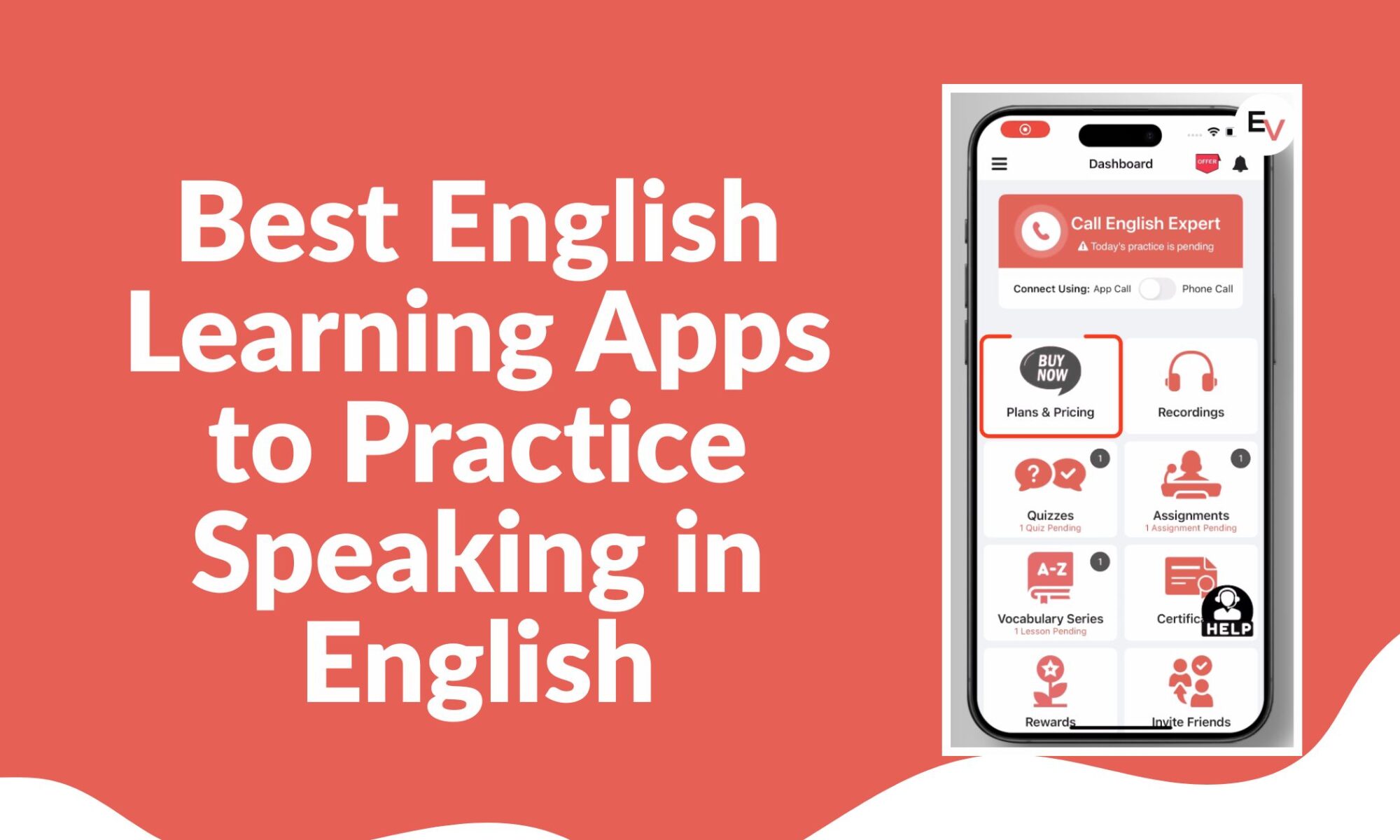
Best English Learning Apps to Practice Speaking in English (2026 Guide)

Best English Learning Apps to Practice Speaking in English

Learning to speak English fluently becomes much easier when you have a regular practice partner—but what if you don’t have one? This is where the EngVarta app makes a real difference. With EngVarta, you no longer need to rely on people around you to practice spoken English. The app connects you with live English experts, allowing you to practice speaking English directly from your smartphone anytime and anywhere.

Whether you are a beginner or someone who understands English but struggles with fluency, EngVarta acts as your personal practice partner. Through one-on-one conversations, real-time feedback, and guided speaking sessions, the app helps improve your fluency, pronunciation, vocabulary, and confidence in a practical and effective way.

Why Use English Learning Apps to Improve Speaking Skills?

English learning apps have transformed the way people practice spoken English. Unlike traditional classrooms, these apps allow learners to practice at their own pace and comfort level. They remove the fear of judgment and encourage learners to speak more freely.

Key benefits of using English learning apps:

  • Practice English anytime, anywhere
  • Learn at your own pace
  • Get instant feedback on pronunciation
  • Improve confidence through daily speaking
  • Access native-speaker conversations

For learners who feel shy or hesitant to speak English in public, mobile apps offer a safe and effective environment to build fluency.

If you want to improve your spoken English effectively, here are the best English learning apps to practice speaking English.

1. EngVarta – One-on-One Spoken English Practice

If you know English but struggle with fluency, EngVarta is one of the best apps to practice spoken English. With over a million downloads and strong ratings, it is quickly becoming a favorite among English learners.

EngVarta offers:

  • One-on-one live English practice
  • Phone-call–based English conversations
  • Certified English experts
  • Focus on fluency and accent improvement

EngVarta plans to introduce video calling features, making it even more interactive. It’s like having your personal English-speaking partner on your phone.

Best for: Beginners and daily practice
Platform: Android App, iOS App, Web

2. Duolingo – Best App for Beginners to Learn English

When it comes to learning a new language, Duolingo is one of the most popular and trusted English learning apps worldwide. It is suitable for beginners as well as advanced learners and uses smart technology to make learning fun and addictive.

Duolingo offers:

  • Grammar and vocabulary lessons
  • Speaking and pronunciation exercises
  • Daily goals, reminders, and rewards
  • Bite-sized lessons for easy learning

The app’s algorithm encourages consistency by sending reminders and adapting lessons based on your progress. If you are just starting your English-speaking journey, Duolingo is an excellent choice.

3. English Conversation – Speaking English App

The English Conversation – Speaking English app focuses mainly on real-life conversations. It includes more than 200 English conversations and videos designed to improve listening and speaking skills.

Key features include:

  • Real-life conversation practice
  • Listening and speaking sessions
  • Quizzes to test understanding
  • Progress tracking and feedback

This app is ideal for learners who want to improve comprehension and gain confidence in everyday English conversations.

Best for: Conversation practice and listening skills

4. HelloTalk – Practice English with Native Speakers

HelloTalk is a highly rated English learning app that connects learners with native speakers from around the world. It allows users to chat via text, voice messages, and audio clips.

Why HelloTalk stands out:

  • Chat with native English speakers
  • Voice messages and audio corrections
  • Built-in grammar correction tools
  • Cultural exchange with real people

Practicing English with native speakers helps learners sound more natural and confident while speaking.

Best for: Real conversations and pronunciation improvement

5. Cake – Learn Spoken English Through Videos

Yes, learning English can really feel like a piece of cake  with the Cake app. This app uses short videos, movie clips, and real-life expressions to teach spoken English.

Features include:

  • Video-based English lessons
  • Voice recording for pronunciation practice
  • Daily speaking challenges
  • Common phrases and expressions

Cake is perfect for learners who enjoy visual learning and want to sound more natural while speaking English.

Best for: Pronunciation and everyday expressions

6. Knudge Me – Smart Vocabulary & Speaking Practice

Knudge Me is a powerful English learning app based on scientific learning algorithms. It focuses on vocabulary building, which is essential for speaking fluent English.

Key highlights:

  • Flashcards and quizzes
  • Smart revision reminders
  • Personalized learning recommendations
  • Vocabulary-based speaking improvement

The app’s algorithm ensures that you revise words at the right time, helping you remember and use them confidently in conversations.

Best for: Vocabulary building and revision

How English Speaking Apps Improve Fluency Faster

English speaking apps are designed using smart algorithms and AI-driven learning models. These systems analyze your performance and suggest personalized lessons to improve weak areas.

Here’s how these apps accelerate fluency:

  • Repetition of common words and phrases
  • Listening to native accents and real-life conversations
  • Speaking practice through voice recording and live calls
  • Vocabulary reinforcement using spaced repetition
  • Daily reminders to maintain consistency

Consistent exposure and active speaking help learners think in English instead of translating from their native language.

How to Choose the Best English Learning App for You

With so many English learning apps available, choosing the right one can feel overwhelming. The best app depends on your learning goals and current English level.

Consider these factors before choosing an app:

  • Your level: Beginner, intermediate, or advanced
  • Your goal: Fluency, pronunciation, vocabulary, or confidence
  • Learning style: Videos, conversations, quizzes, or live classes
  • Time availability: Short daily sessions or long practice hours

For example:

  • Beginners should start with EngVarta or Cake
  • Fluency seekers should try EngVarta or HelloTalk
  • Vocabulary learners benefit from EngVarta 

Tips to Improve Spoken English Using Apps

Simply downloading an app is not enough. To see real improvement, you need a smart practice strategy.

Effective tips for better results:

  • Practice speaking daily, even for 10–15 minutes
  • Speak aloud instead of only reading or listening
  • Record your voice and compare pronunciation
  • Repeat common phrases and sentences
  • Don’t fear mistakes—fluency comes with practice

Consistency matters more than perfection.

Common Mistakes English Learners Should Avoid

Many learners use English apps but still struggle due to common mistakes.

Avoid these errors:

  • Focusing only on grammar instead of speaking
  • Skipping speaking exercises
  • Practicing irregularly
  • Being afraid of making mistakes
  • Not revising learned vocabulary

Fluency improves when speaking becomes a habit, not an occasional activity.

Who Can Benefit from English Speaking Apps?

English learning apps are suitable for a wide range of learners:

  • Students preparing for exams or interviews
  • Working professionals improving communication skills
  • Job seekers preparing for global opportunities
  • Travelers wanting conversational English
  • Beginners starting their English journey

No matter your age or background, English speaking apps can help you improve.

👉 Connect with EngVarta on Social Media

Instagram : 👉  https://www.instagram.com/engvarta.app/

Youtube : 👉  http://www.youtube.com/@EngVarta

Facebook : 👉  https://www.facebook.com/engvarta

LinkedIn : 👉  https://www.linkedin.com/company/engvarta

Conclusion

Improving spoken English no longer requires expensive classes or finding a physical practice partner. With the right English learning apps, you can practice speaking English anytime and anywhere. From beginner-friendly apps like EngVarta App to conversation-focused platforms like HelloTalk and Duolingo, each app offers unique tools to help you become a fluent English speaker.

The key to success is consistency. Choose an app that matches your learning style, practice daily, and don’t be afraid to speak—even if you make mistakes. With regular effort, fluency will follow.

Happy learning, and keep speaking English with confidence!

Frequently Asked Questions (FAQs)

  • Do these apps help improve pronunciation and accent?
    • Yes. The EngVarta App helps improve pronunciation and overall clarity by encouraging regular speaking practice and providing feedback during live conversations. The focus is on clear, understandable English rather than forcing a specific accent.

  • Are these English learning apps suitable for beginners?
    • Yes. The EngVarta App is suitable for beginners as well as intermediate learners. It allows users to start with simple conversations and gradually move to more advanced speaking levels at their own pace.

  • How much time does it take to get better at speaking English?
    • With daily practice on the EngVarta App, many learners start noticing improvement within a few weeks. Speaking for 15–30 minutes a day consistently helps build fluency, clarity, and confidence over time.

  • Can I learn spoken English for free using these apps?
    • Yes, you can start learning spoken English for free on the EngVarta App. It offers free access options to experience real speaking practice before choosing a paid plan for more consistent improvement.

  • Which is the best app to practice spoken English?
    • The EngVarta App is one of the best apps to practice spoken English because it focuses on real conversations with live experts. It helps learners speak daily, improve fluency, and gain confidence through practical usage rather than theory.

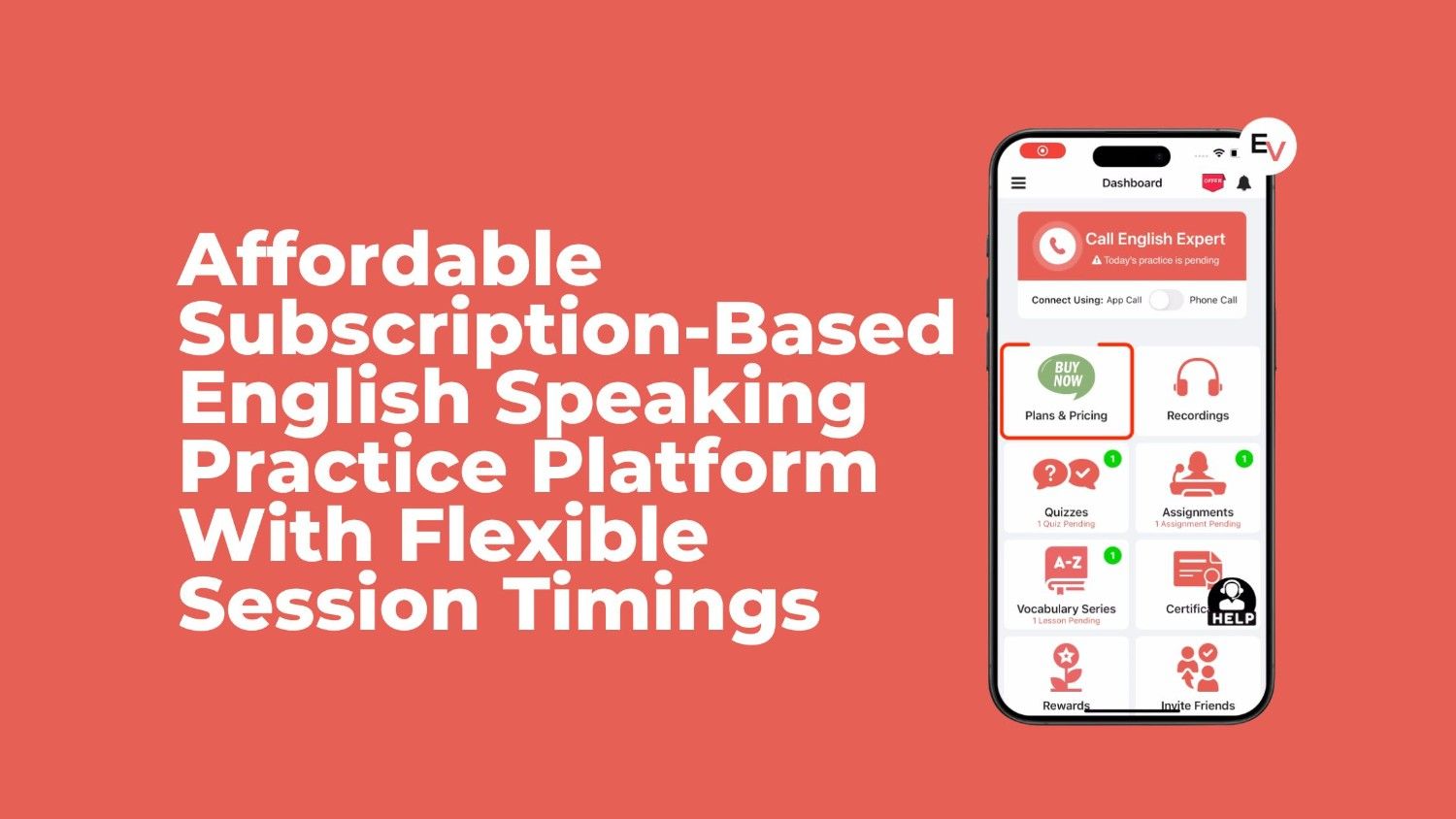
Affordable subscription-based English speaking practice platforms with flexible session timings

English speaking practice platforms

If you’ve ever searched for affordable English speaking practice platforms, you already know how crowded the market is—free YouTube lessons, group conversation clubs, AI chatbots, and paid apps that promise fluency in ‘30 days.’ But most learners eventually realize one truth: speaking improves when it becomes a daily habit, not just a hopeful goal. 

That’s why subscription-based English speaking practice platforms with flexible session timings are growing so fast. They remove the biggest barriers—time and consistency. Among these platforms, EngVarta App stands out because it focuses on what truly builds fluency: real conversations, daily speaking practice, and meaningful feedback, all without rigid schedules or expensive coaching routines.

Why English speaking practice matters more than ever

English is rarely a “native vs non-native” conversation anymore. A British Council estimate notes 2.3 billion people speak English to some level, and a large share are non-native speakers—meaning most real-world English conversations happen between learners and multilingual professionals.

In India specifically, the payoff is not just confidence—it can be economic. Research summarized on Ideas for India reports a strong wage premium associated with English fluency (with different estimates by gender and other factors).

Now combine that with what employers keep repeating: communication is one of the most in-demand skills. One 2025 employer-insights piece highlights communication skills among top in-demand skills in India.

So the question isn’t “Should I practice speaking?”
It’s: Which practice method actually fits daily life and stays affordable?

What “affordable + flexible” really means in a speaking platform

Affordability isn’t just about price. It’s about the value per week of consistent speaking. A platform is truly affordable when it helps you:

  • practice regularly (not occasionally)
  • get feedback (not just content)
  • fit sessions into your real schedule
  • build confidence through repetition

Flexible timing matters because most learners don’t fail due to “lack of motivation.” They fail because their day is chaotic: commuting, family responsibilities, shifts, college, deadlines. A platform that lets you practice when you’re actually free wins.

EngVarta app explicitly positions itself around practice with live experts and availability across 7 AM–11:59 PM IST—which is the kind of flexibility subscription learning is supposed to deliver.

Types of online English speaking practice platforms 

1) Free options: great for input, weak for output

Free YouTube videos, podcasts, reels, and grammar content are amazing for exposure. But they don’t force you to speak—and speaking is a muscle. Free resources often improve understanding, not fluency.

2) Conversation communities and “nearby” opportunities

Local speaking groups, college clubs, coworking meetups, and community gatherings can help—if you’re comfortable showing up and if the group is consistent. The downside is irregularity and mixed feedback quality.

3) AI-based practice tools

AI practice tools are excellent for low-pressure rehearsal. They help with repetition and can provide quick feedback. But many learners still struggle when the conversation becomes human—because real conversations include interruptions, emotion, pace shifts, and unpredictability.

4) Subscription-based live speaking platforms

This category works best when it combines three things: human interaction + feedback + flexibility. That’s where EngVarta App is positioned: 1-on-1 live practice, real-time corrections, session recordings, and flexible hours.

Quick comparison: what you get (in practice)

Option Cost Flexibility Feedback quality Best for
YouTube / free videos Free High Low Listening + basics
Local clubs/meetups Low/Free Medium Medium Social confidence
AI chat practice Low–Medium Very high Medium Rehearsal + repetition
EngVarta (subscription) Medium High High (live corrections) Real fluency + confidence

EngVarta’s model is especially helpful for learners who say: “I know English, but I freeze when I speak.” That’s exactly the gap real-time practice closes.

Why EngVarta App is the best platform for subscription-based speaking practice

Real 1-on-1 speaking practice (not passive learning)

EngVarta App is designed as “practice-first.” It emphasizes speaking with live English experts rather than only lessons.

Flexible session timings that match real life

The platform highlights availability from 7 AM to 11:59 PM IST, which is a major advantage for working professionals, students, homemakers, and business owners.

Real-time corrections + recordings (feedback loop)

EngVarta mentions instant feedback and session recordings, which create a powerful loop: speak → get corrected → replay → improve.

Proven adoption signal (people are actually using it)

EngVarta’s App Google Play listing shows 10L+ downloads, suggesting strong adoption at scale.

👉 Download EngVarta App today and start building fluent English skills .

Download app for Android 

Download app for iOS 

“But I want AI-based practice too” — here’s the smart way to combine it

A practical modern routine looks like this:

Use AI for rehearsal (low-pressure repetitions)

Use AI tools to practice:

  • introductions
  • role-plays (interview, client call, small talk)
  • pronunciation repetition
  • vocabulary upgrades

Use EngVarta App for real conversation conditioning

Then use EngVarta for:

  • handling interruptions
  • thinking on your feet
  • natural speed + flow
  • real-time correction patterns

AI helps you prepare. Live practice helps you perform.

How to pick the right plan (without overthinking)

If you’re choosing a subscription, the best strategy is to pick what you can sustain, not what looks impressive.

Start with a plan that allows:

  • at least 3 speaking sessions per week
  • consistent time slot you can keep
  • review time for recordings/notes

EngVarta’s own guidance emphasizes practice and mentions that a subscription is required to speak with experts.

How to get faster results on EngVarta (daily-use strategy)

1) Keep a “daily life script bank”

Write 10 short situations you face daily:

  • asking for updates at work
  • giving a status report
  • explaining a delay
  • booking an appointment
  • talking to a teacher/colleague

Repeat them until they feel automatic.

2) Use a 3-part session structure

Before the call: 30 seconds—what happened today?
During the call: 1 main topic + 1 role play
After the call: note 3 corrections + replay 1 minute of recording

3) Measure progress in confidence, not perfection

The examiner/boss/friend doesn’t need perfect grammar. They need clarity, flow, and confidence.

4) Make your schedule boring (boring = consistent)

The most powerful habit is the simplest one: same time window, same frequency.

Here’s a clean, engaging section you can use in your blog under the heading:

👉 Connect with EngVarta on Social Media

Instagram : 👉  https://www.instagram.com/engvarta.app/

Youtube    : 👉  http://www.youtube.com/@EngVarta

Facebook: 👉  https://www.facebook.com/engvarta

LinkedIn: 👉  https://www.linkedin.com/company/engvarta

What Learners Are Saying About EngVarta App

Real learners often describe their English learning journey with EngVarta App in ways that go beyond test scores — they talk about confidence, real-life improvement, and meaningful progress. Here’s what users are sharing after practicing regularly:

EngVarta App Review

Final Thoughts :

If you want the most effective blend of affordability and results, you need three ingredients:

  1. A subscription model that makes practice consistent
  2. Flexible session timings so life doesn’t break your routine
  3. Feedback so you don’t repeat the same mistakes forever

EngVarta fits this framework strongly with its live 1-on-1 expert practice, real-time corrections, recordings, and wide timing window (7 AM–11:59 PM IST)—making it one of the most practical options for daily speaking practice.

Frequently Asked Questions (FAQs)

IELTS English Speaking Practice Questions and Answers on Daily Life and Routine

IELTS English Speaking Practice

In the IELTS Speaking test, examiners are not searching for perfect English. They focus on how clearly you express ideas, how naturally your speech flows, and how confident you sound. Many candidates struggle because their practice doesn’t feel like the real exam. This is where the Fixolang App makes a difference. It offers IELTS English Speaking Practice in a real test-like format, helping you speak on common topics such as daily life and routine with better fluency, clarity, and confidence before the actual test.

Why Daily Life & Routine Matters in IELTS Speaking

Daily routine topics appear constantly in Part 1 and often connect to Part 2 (cue card) and Part 3 (discussion).

Why examiners love it:

  • Everyone can answer (so they can judge your English, not your knowledge)
  • It reveals your fluency, tense control, and coherence
  • It tests how naturally you speak about ordinary things

The trick:
Don’t sound like a textbook. Sounds like a real person.

That’s exactly where AI-based practice becomes powerful—because repetition + feedback turns awkward speaking into automatic speaking.

How Fixolang App Makes IELTS Speaking Practice Easier

The Fixolang App is designed for IELTS Speaking Practice that feels close to exam conditions:

What you get inside Fixolang

  • Real Time IELTS Speaking Test simulation (timed answers, exam-like flow)
  • Instant scoring and performance insights (fluency, vocabulary, grammar, pronunciation)
  • Personalized feedback: what to fix, what to keep, what to upgrade
  • Repeat practice loop: attempt → feedback → improved attempt (this is where band jumps happen)
  • Targeted prompts for Part 1, Part 2, Part 3

Why this matters 

As IELTS trainers know, most learners don’t fail because they “don’t know English.”
They fail because they can’t produce English smoothly under pressure.

Fixolang solves that by making practice:

  • consistent (daily)
  • measurable (scores + feedback)
  • realistic (test format)
  • corrective (specific improvements, not generic advice)

Start Practising on the Fixolang App

👉 Download on Google play.

👉 Download on the App Store.

IELTS English Speaking Practice Exam: Questions and Answers on Everyday Life and Routines

Below are exam-style questions with answers you can adapt. Keep your answers:

  • 6–12 seconds for simple Part 1
  • 12–20 seconds for slightly deeper Part 1
  • always natural, not memorized

1) What time do you usually wake up?

Answer:
I usually wake up around 6:30 on weekdays because I like to start my day early. On weekends, I sleep in a bit—maybe until 8—just to catch up on rest.

Upgrade phrases: sleep in, catch up on rest, start the day early

2) Do you like mornings more, or do you consider yourself a night owl?

Answer:
Honestly, I’m more of a night person. I feel most focused in the evening, especially when it’s quiet. Mornings are fine, but it takes me a while to fully wake up.

Natural linkers: honestly, especially, but

3) Do you prefer a fixed routine or a flexible routine?

Answer:
I prefer a balanced routine. I like having a basic structure so I don’t waste time, but I also want flexibility because unexpected things happen.

Band booster idea: show contrast + reason

4) What do you usually have for breakfast?

Answer:
I keep it simple—something quick like eggs or toast. If I’m in a hurry, I just grab a banana and coffee and eat properly later.

Everyday vocabulary: keep it simple, in a hurry, grab

5) How do you travel to work or study?

Answer:
Most days I commute by public transport because it’s practical and saves parking trouble. I also use that time to listen to podcasts or review notes.

Fluency trick: add a “small extra detail” naturally

6) What activities do you typically engage in during the evening

Answer:
In the evening, I usually unwind a bit—maybe take a walk or scroll on my phone. After that, I plan the next day and try to sleep on time.

Upgrade phrases: unwind, plan the next day, sleep on time

7) Do you like doing household chores?

Answer:
Not really, but I do them because I like a clean space. I usually clean in short bursts, so it doesn’t feel too exhausting.

8) How often do you exercise?

Answer:
These days, I try to exercise three to four times a week. Even if I can’t do a full workout, I at least try to move—like walking or stretching.

Key idea: show consistency + realistic honesty

9) Do you get enough sleep?

Answer:
I try to, but not always. When I’m busy, my sleep schedule gets messy. I’m working on it because I know it affects my mood and energy.

Band booster: cause-effect language

10) What part of your day is the most productive?

Answer:
My most productive time is late morning. That’s when my mind feels fresh, and I can focus without getting distracted easily.

Part 2 Cue Card: Daily Routine (High-Scoring Sample)

Cue Card: Describe your daily routine. You should say:

  • what you usually do
  • why you follow this routine
  • what you would like to change about it

Answer (Band 7+ style):
My daily routine is quite structured on weekdays. I usually wake up around 6:30, get ready, and start work by 9. I prefer beginning my day with a simple breakfast because it keeps me energetic without wasting time. During work hours, I try to focus on blocks, so I don’t keep switching tasks. In the evening, I unwind for a bit—sometimes I take a walk—and then I plan my next day. I follow this routine mainly because it keeps my life predictable and reduces stress. If I could change one thing, I’d reduce my screen time at night because it delays my sleep and makes mornings harder.

Why this works: structured, clear sequencing, natural vocabulary, honest reflection

Part 3 Discussion: Routine, Productivity, Lifestyle (Q&A)

1) Do you think routines are important for success?

Answer:
Yes, to some extent. A routine reduces decision fatigue and helps people stay consistent. However, being too rigid can be stressful, so balance matters.

2) How has modern life changed people’s daily habits?

Answer:
Modern life has made routines faster and more screen-based. People multitask more, sleep later, and often blend work and personal life, especially with remote work.

3) Should children have strict routines?

Answer:
They should have healthy routines, like sleep schedules and study time, but strict routines can feel controlling. Children also need free time to explore and relax.

Tips to Optimize Fixolang App for Better IELTS Results

1) Don’t chase “fancy words”

Chase clear meaning + natural flow. Fixolang feedback will often reward clarity over memorization.

2) Use the “Repeat with improvement” method

Same question. Better answer. That’s how your brain rewires.

3) Track patterns, not single scores

If Fixolang shows repeated issues like:

  • too many pauses
  • weak grammar accuracy
  • limited vocabulary
    Then fix one theme per week.

4) Practice under timer

A Real Time IELTS Speaking Test feels different. Timing teaches calm.

5) Build your “daily life vocabulary bank”

Keep a small list of phrases you reuse naturally:

  • unwind, sleep in, commute, in a hurry, catch up, focus in blocks, decision fatigue

What Learners Say About Fixolang (User Review Style Highlights)

Here are common review-style outcomes you can highlight in your page copy:

  • “I finally know why my band is stuck.” (clear diagnostic feedback)
  • “The scoring feels motivating and pushes me to improve.” (habit-building)
  • “I ceased translating mentally following consistent practice.”
  • “The test-like format reduced my speaking anxiety.” (confidence)

(If you have real reviews, replace these with actual lines—keep them short and specific.)

Connect with FixoLang on social media platforms

🟦 Facebookhttps://www.facebook.com/fixolang/

📸 Instagram :  https://www.instagram.com/FixoLang/

▶️ YouTube : https://www.youtube.com/@FixoLang

Conclusion

IELTS speaking isn’t about impressing the examiner.
It’s about sounding clear, calm, and natural.

The fastest path is not “more rules.”
It’s more real practice + feedback.

If you want IELTS Speaking Practice that feels like an exam—while still being convenient and guided—use the Fixolang App to train with a Real Time IELTS Speaking Test approach, get instant feedback, and upgrade your answers day by day.

FAQ (Frequently Asked Questions)

  • What should I talk about for daily routine topics?
    • You can talk about your morning habits, work or study schedule, meals, commuting, exercise, evening activities, sleep, and lifestyle changes. Fixolang App provides guided daily-life prompts so you always know what to speak about and how to improve your answers.

  • How often should I practice speaking IELTS?
    • You should practice speaking IELTS daily, even for 10–15 minutes. Fixolang App makes daily practice easy by offering quick speaking tasks, instant evaluation, and personalized suggestions to improve faster with consistency.

  • How can the Fixolang App improve my IELTS Speaking score?
    • Fixolang App gives timed practice, instant scoring, and personalized feedback so you can repeat answers, fix mistakes fast, and build confidence consistently.

  • How does a Real Time IELTS Speaking Test help?
    • A Real Time IELTS Speaking Test helps you experience exam-like pressure, timing, and question flow. The Fixolang app simulates this format and uses AI to score your responses, helping you reduce hesitation and perform naturally in the actual test.

  • What is IELTS English Speaking Practice?
    • IELTS English Speaking Practice means regularly answering real IELTS-style questions to improve fluency, pronunciation, vocabulary, and confidence. With the Fixolang App, learners practice daily using AI-powered speaking tests and instant feedback.

Why Fluent English Is Required for International Business ?

Fluent English for International Business

In today’s global economy, borders matter less than ever—but communication matters more than ever. Businesses operate across countries, cultures, and time zones, and one common thread connects them all: English. Not just basic English, but fluent English. The ability to communicate ideas clearly, confidently, and naturally in English has become a core business skill, not an optional advantage.

This is why Fluent English for International Business is no longer a “nice to have.” It is a requirement.

In this blog, we’ll explore why fluent English is essential for international business, how it impacts professional success, and how modern tools like EngVarta App help global professionals build real-world fluency that works in business settings.

English: The Operating Language of Global Business

English has emerged as the default language of international trade, technology, finance, consulting, and corporate communication. From emails and presentations to negotiations and client calls, English in international business is the medium through which decisions are made.

However, knowing English at a basic level is no longer enough. Global professionals are expected to:

  • Speak confidently in meetings
  • Respond quickly and clearly during discussions
  • Explain ideas without hesitation
  • Adapt their tone across cultures

This level of performance requires fluency, not memorization.

What Does Fluent English for International Business Really Mean?

Fluency is often misunderstood. It’s not about using complex vocabulary or sounding like a native speaker. In business, fluency means:

  • Expressing ideas smoothly and logically
  • Thinking in English instead of translating mentally
  • Handling questions and objections in real time
  • Communicating with clarity, confidence, and control

For business English for international professionals, fluency is about effectiveness. Can your message land correctly the first time? Can you hold attention in a global meeting? Can you build trust through your communication?

Why Fluent English Is Required—Not Optional

1. Clear Communication Prevents Costly Errors

In international business, miscommunication can be expensive. A poorly worded email, an unclear instruction, or hesitation during a call can lead to:

  • Project delays
  • Missed expectations
  • Contract misunderstandings
  • Loss of client trust

English for international business communication must be precise and unambiguous. Fluent English reduces the risk of confusion and ensures alignment across teams and stakeholders.

2. Fluency Builds Professional Credibility

In global workplaces, how you speak often shapes how you are perceived. Even highly skilled professionals may be underestimated if they struggle to express themselves clearly.

Fluent English:

  • Makes professionals sound confident and prepared
  • Enhances perceived competence
  • Strengthens leadership presence

This is why English fluency directly impacts career growth, especially for roles involving global exposure.

English in International Business Is Context-Driven

International business communication is not one-size-fits-all. The way you speak in:

  • A board meeting
  • A client pitch
  • A performance review
  • A conflict-resolution call

Professionals who are fluent can:

  • Adjust formality instantly
  • Choose culturally appropriate language
  • Handle sensitive conversations diplomatically

This adaptability is at the heart of international business English in everyday use.

Everyday Use of International Business English

Fluency is tested in daily moments, not just big presentations. Consider situations like:

  • Explaining a delay to an overseas client
  • Giving feedback to a global teammate
  • Negotiating timelines with international vendors
  • Participating in cross-border brainstorming sessions

In these moments, hesitation or unclear phrasing can weaken impact. Fluent English allows professionals to stay calm, responsive, and effective—every single day.

Why Traditional Learning Falls Short for Business Professionals

Many professionals have studied English for years, yet still feel nervous speaking at work. This happens because traditional learning methods focus heavily on:

  • Grammar rules
  • Written exercises
  • Exams and certifications

While useful, these methods rarely prepare learners for spontaneous, real-world business conversations. As a result, professionals know English—but don’t feel fluent using it.

This gap has led many to search for the Best English Learning App, the Best English Practice App, or the Best English Speaking App—tools that prioritize speaking over theory.

The Role of Practice in Achieving Business English Fluency

Fluency is a skill, and like any skill, it improves through practice.

To build Fluent English for International Business, professionals need:

  • Regular speaking practice
  • Realistic business scenarios
  • Immediate, constructive feedback
  • A safe environment to make mistakes

This is where practice-based platforms outperform traditional courses.

How EngVarta App Supports Global Professionals

EngVarta App is designed for professionals who want to use English confidently, not just learn it. Its approach focuses on practical fluency, especially for business contexts.

Key benefits for international professionals include:

  • Live one-to-one speaking practice with trained experts
  • Conversations based on real business situations
  • Feedback on fluency, clarity, and confidence
  • Flexible sessions that fit busy work schedules

This makes EngVarta App a strong choice for professionals evaluating the Best English Practice App for international business needs.

👉 Download EngVarta App today and start building fluent English skills that support real international business success.

Download app for Android 

Download app for iOS 

Why Modern Professionals Choose Speaking-Focused Apps

Time is limited, and professionals want results. They prefer learning methods that:

  • Show improvement quickly
  • Are directly applicable at work
  • Build confidence through practice

This is why many global professionals turn to platforms like EngVarta App when searching for the Best English Speaking App—because speaking is the fastest path to fluency.

Building Long-Term Fluency, Not Short-Term Confidence

True fluency is sustainable. It doesn’t disappear after a few good conversations. It grows with consistent practice, feedback, and exposure to varied situations.

EngVarta App’s practice-first approach supports long-term fluency, helping professionals move from hesitation to ease in international business communication.

👉 Connect with EngVarta on Social Media

📸 Instagram : 👉  https://www.instagram.com/engvarta.app/

▶️ Youtube    : 👉  http://www.youtube.com/@EngVarta

🅕  Facebook: 👉  https://www.facebook.com/engvarta

🔵 LinkedIn: 👉  https://www.linkedin.com/company/engvarta

Final Thoughts

In the world of global business, communication is influential.
And Fluent English for International Business is the tool that allows professionals to influence clearly, confidently, and consistently.

Fluency reduces friction, builds trust, and unlocks global opportunities. For professionals aiming to succeed internationally, fluent English is no longer optional—it is essential.

FAQs (Frequently Asked Questions)